Evergreen content generates three times more traffic than time-sensitive articles, according to a 2026 HubSpot finding summarized here. That should change how most small businesses think about content.
A lot of owners are still trapped in a publishing cycle that looks productive but creates very little lasting value. They post a quick reaction piece, a seasonal update, a short promotional blog, then repeat the process next week because traffic falls off almost immediately. The work never stops, yet the asset base never grows.
An evergreen content strategy fixes that by shifting the goal. You stop treating content as disposable output and start treating it as infrastructure. A useful guide, tutorial, checklist, or pillar page can keep attracting search traffic, assist sales conversations, support email nurture, and answer customer questions long after it’s published.
That matters even more for lean teams. If you run a local service business, an e-commerce store, or a small B2B company, you probably don’t need more random posts. You need a content system that keeps working when you’re busy serving customers.
Table of Contents
- Stop the Content Treadmill Start Building Assets
- What Is an Evergreen Content Strategy
- The Compounding ROI of an Evergreen Approach
- The Core Components of a Winning Strategy
- A Practical Playbook for Evergreen Execution
- Automate and Scale Your Strategy with OutRank
- Build Your Traffic Engine for 2026 and Beyond
Stop the Content Treadmill Start Building Assets
Most small businesses don't have a content problem. They have an asset problem.
They publish often enough, but too much of that work is tied to short-lived topics. A promotion expires. A platform update changes. A trend cools off. Then the post that took hours to write stops pulling its weight. The team moves on, but the workload stays.
That cycle feels like momentum because something is always getting published. In practice, it acts more like rent than investment. You keep paying for attention, but you don't build much equity.
Why more content often produces less leverage
Time-sensitive content has a role. It can capture a spike of interest, support a launch, or give your brand a reason to comment on something current. The problem starts when it becomes the whole strategy.
When every article depends on novelty, your calendar controls you. You have to keep feeding it. That usually creates three issues:
- The archive loses value: Old posts stop helping because they were never built to last.
- Sales teams get weak support: Reps can't keep reusing content that goes stale fast.
- SEO compounds slowly: Search performance gets scattered across disconnected posts instead of strengthening a topic over time.
Practical rule: If a piece won't still help a prospect months from now, it probably shouldn't be the core of your content plan.
What an asset-first mindset looks like
An evergreen asset does more than rank. It answers a durable question your customers keep asking. Think "how to choose the right HVAC system," "what affects shipping costs," or "how to compare bookkeeping software for a small business."
Those topics don't depend on a news cycle. They map to recurring customer intent.
A strong evergreen content strategy treats each piece as something that can serve multiple jobs:
| Content type | Short-term role | Long-term role |
|---|---|---|
| Buyer guide | Supports active prospects | Keeps attracting search traffic |
| Tutorial | Reduces pre-sale friction | Becomes a reusable support asset |
| FAQ hub | Helps conversion pages | Builds topical relevance over time |
This is the shift that matters. You stop asking, "What can we post this week?" and start asking, "What can we publish once, improve over time, and use everywhere?"
For a small business, that's a much better game.
What Is an Evergreen Content Strategy
Think of content like a garden.
A trending content garden needs constant replanting. You get a burst of color, then it fades. If you stop planting, it stops producing. An evergreen content strategy works more like a perennial garden. You choose the right plants, put them in the right places, maintain them on a schedule, and they keep growing back stronger.
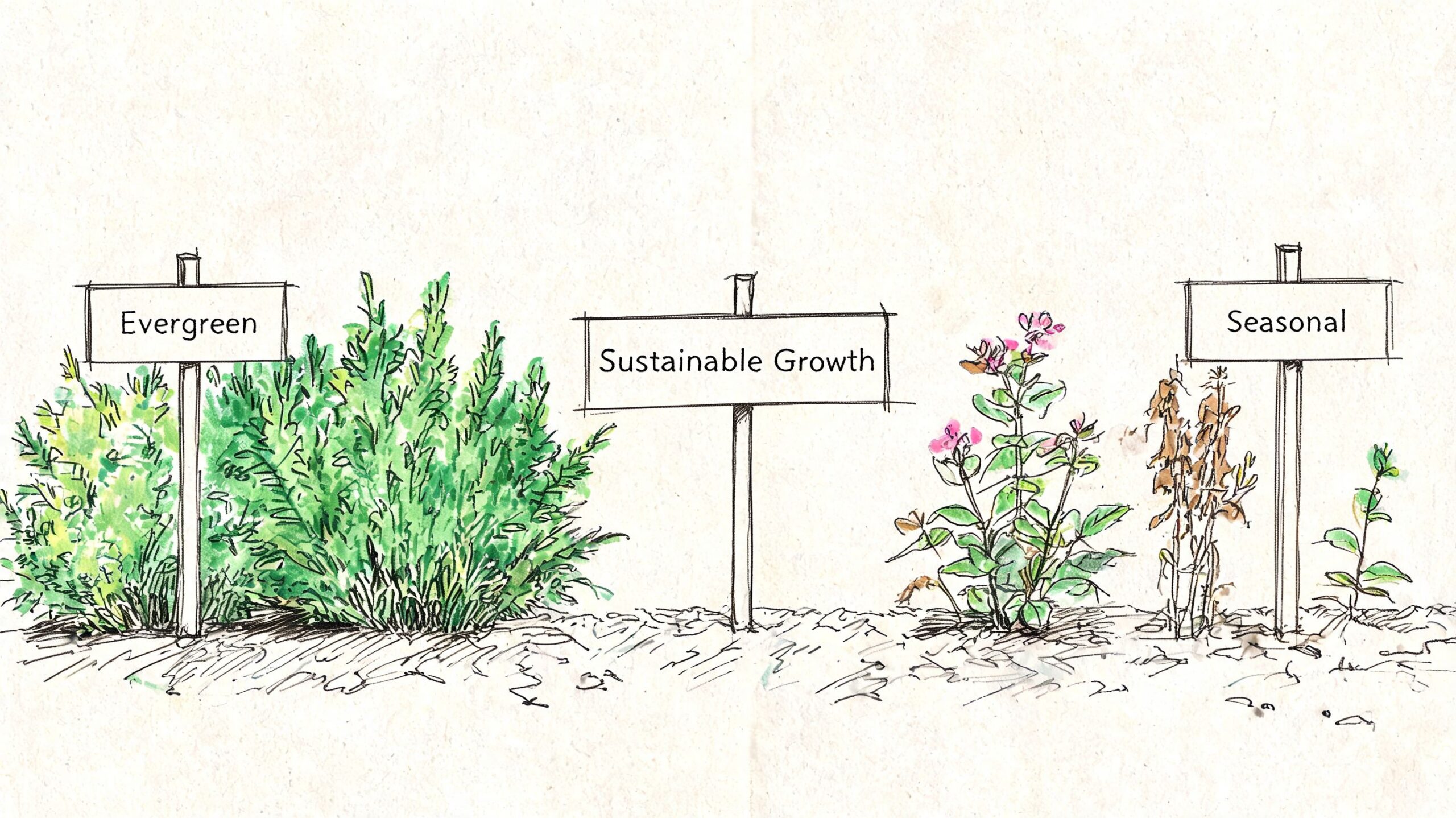
That analogy helps because evergreen isn't about age. It's about continued relevance. A page can be published today and still be evergreen if the topic stays useful over time.
What counts as evergreen
Evergreen topics solve recurring problems, explain stable concepts, or guide buyers through decisions that don't disappear. Good examples include:
- How-to guides: step-by-step instructions tied to enduring needs
- Beginner explainers: pages that answer foundational questions
- Comparison resources: content that helps buyers evaluate options
- Operational checklists: repeatable processes customers want to follow
- Core FAQs: answers your team gives repeatedly in sales or support
These formats work because they align with persistent intent. People keep searching for them, and businesses keep benefiting from having them published.
What doesn't count
Some content should never be mistaken for evergreen:
- News reactions
- Seasonal promotions
- Year-specific trend posts
- Short-lived platform updates
- Announcements with an expiration date
That content isn't bad. It's just not a durable foundation.
Evergreen content should still feel useful after the original campaign ends.
The strategy is bigger than the article
A lot of teams misunderstand evergreen by treating it as a writing style. It isn't. It's an operating model.
The strategy includes topic selection, keyword filtering, content format, internal linking, update cadence, and repurposing. It also includes deciding where current content fits. Some businesses need a few trend-driven pieces for social reach or launch support, but those should sit on top of a stable evergreen base, not replace it.
A practical way to judge a topic is simple. Ask three questions:
- Will customers still care about this later?
- Can sales or support reuse it?
- Can it connect to other pages on the same topic?
If the answer is yes to all three, you're probably looking at evergreen potential.
The Compounding ROI of an Evergreen Approach
The primary advantage of an evergreen content strategy isn't that it sounds disciplined. It's that the economics are better.
A trending article often acts like a campaign expense. It gets attention, then tapers off. An evergreen asset behaves more like owned media. It can keep producing traffic, support conversions, and create linking opportunities long after publication. That changes the return profile of every hour you put into content.
Start with the right content mix
A useful baseline comes from Allied Insight's evergreen versus trending analysis, which states that an 80/20 evergreen-to-trending content ratio serves as the optimal baseline for B2B strategies, and that one original piece often generates five additional assets like infographics, videos, and case studies.
That mix works because it protects both sides of the business. You keep enough timely content to stay relevant, but the bulk of your effort goes into pages that can keep earning results.
For small businesses, that usually means your monthly calendar should be built around assets first, then topped up with reactive pieces only when they serve a clear purpose.
Why the return compounds
Evergreen content can improve performance in several ways at once:
- Search value accumulates: A useful page can keep collecting impressions, clicks, and backlinks over time.
- Sales enablement improves: One guide can answer objections in calls, emails, and landing pages.
- Repurposing gets cheaper: A strong original article can become a short video, email series, lead magnet, or FAQ page without starting from zero.
- Update costs stay lower than replacement costs: Improving an existing winner is usually more efficient than inventing a new post every week.
That last point is where many owners miss the opportunity. They keep commissioning net-new content when a stronger move is often to expand, improve, and redistribute assets that already proved demand.
Owner mindset: Don't ask whether a post performed in week one. Ask whether it can keep helping your business next quarter.
Asset value versus activity value
Here’s the trade-off in plain terms.
| Approach | What you get fast | What you keep later |
|---|---|---|
| Trending-heavy publishing | Short-term spikes and social hooks | Limited residual value |
| Evergreen-heavy publishing | Slower early momentum in some cases | Reusable assets and steadier search value |
This is why the system matters. If your team is always optimizing for immediate activity, you'll produce a lot and retain little. If you're building evergreen assets, each publication can strengthen the next one.
A guide can become a cluster. A cluster can support a category page. A category page can help your whole domain rank better on a commercial theme. That isn't abstract theory. That's what sustainable content economics look like.
The Core Components of a Winning Strategy
A strong evergreen content strategy usually stands or falls before the writing starts. Most weak results come from one of three mistakes. The topic isn't durable, the format doesn't fit the intent, or the keyword target was chosen because it sounded good instead of because demand looked stable.
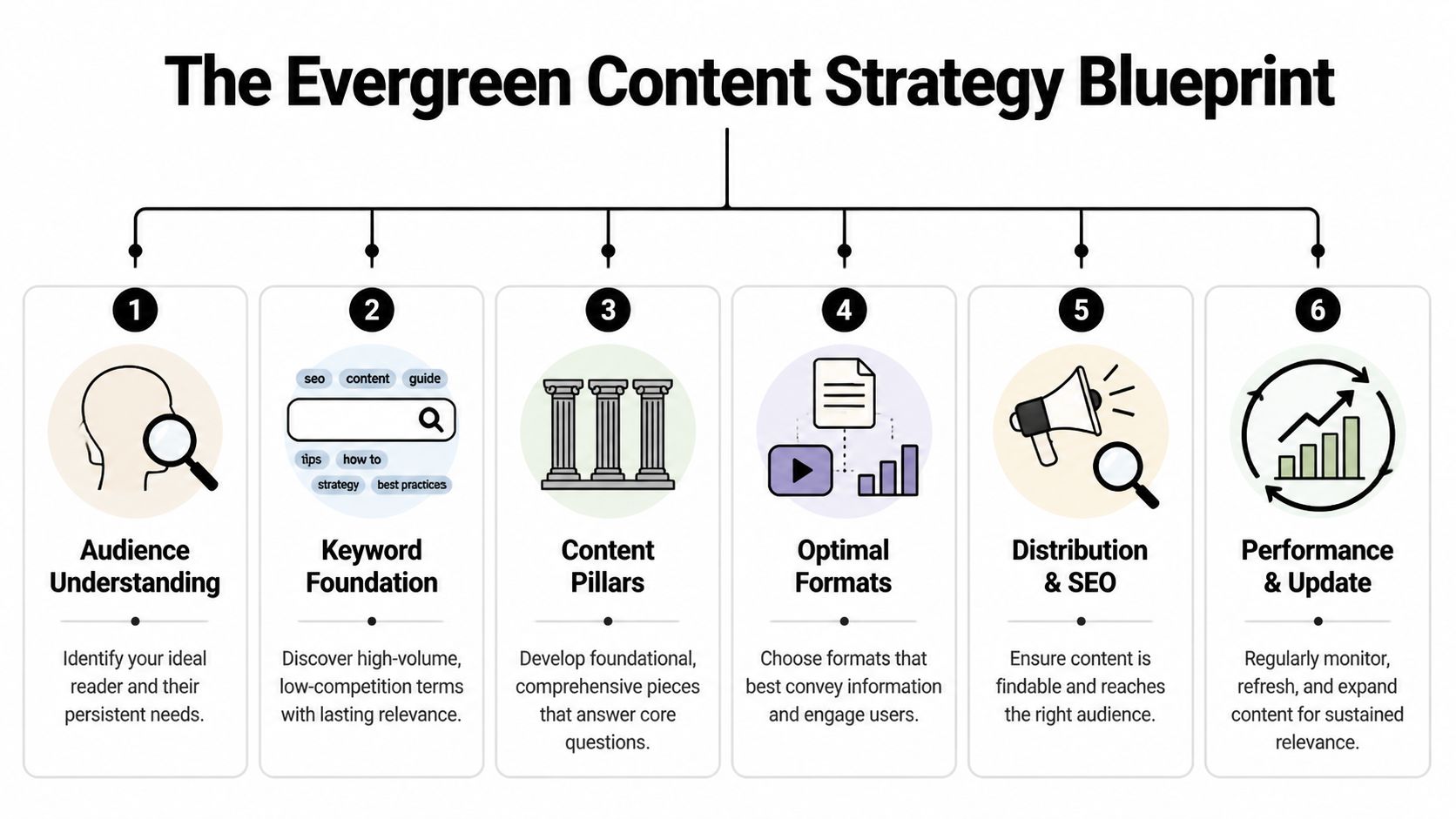
Choose topics that survive your next campaign
The best evergreen topics come from repeated customer questions. Look at sales call notes, chat transcripts, support tickets, quote requests, and product demos. If people keep asking the same thing, that topic has staying power.
Good examples by business type:
- Local services: repair timelines, cost factors, buying criteria, service comparisons
- E-commerce: sizing guides, material care, compatibility, product selection help
- B2B services: implementation steps, vendor evaluation, pricing models, common mistakes
Bad topic selection usually sounds more exciting than useful. "Big changes in the market" gets attention for a minute. "How to compare payroll providers for a growing company" keeps earning its place.
Pick formats built for long shelf life
Format matters more than people think. Some formats naturally support skimming, updates, and internal links. Others age badly.
The formats I trust most for evergreen work are:
- Pillar guides for broad educational topics
- Step-by-step tutorials for process-driven searches
- Checklists for operational tasks
- Comparison pages for evaluation-stage intent
- FAQ libraries for recurring objections
These formats hold up because they are modular. You can revise a section, add examples, improve structure, and keep the URL intact. That's hard to do with content built around novelty or opinion.
A durable format makes maintenance easier. That becomes critical once your library grows.
Filter keywords for staying power
A simple technical filter can save you from a lot of wasted effort. Leadspanda's evergreen guidelines state that targeting keywords with sustained search volume of at least 1,000 monthly searches is a critical benchmark, because it signals durable interest rather than a short-lived spike.
That doesn't mean every small business should ignore lower-volume terms. It means this threshold is a useful benchmark when you're evaluating whether a topic has broad, lasting demand.
Use tools like Google Search Console, GA4, and your keyword platform of choice to check whether interest looks stable. Favor queries that are question-based, problem-based, or decision-based. Be careful with keywords that depend on dates, product releases, or temporary events.
A practical planning table helps:
| Component | What to look for | What to avoid |
|---|---|---|
| Topic | Recurring customer problem | Trend-driven curiosity |
| Format | Update-friendly structure | One-off commentary |
| Keyword | Stable informational intent | Short-term spike terms |
When those three line up, you don't just have an article idea. You have something worth building into a system.
A Practical Playbook for Evergreen Execution
Execution is where most evergreen plans fall apart. Teams either overcomplicate the process or they publish isolated articles with no structure behind them.
A better approach is simple. Build one authoritative page, surround it with closely related support content, then maintain the cluster on a schedule.
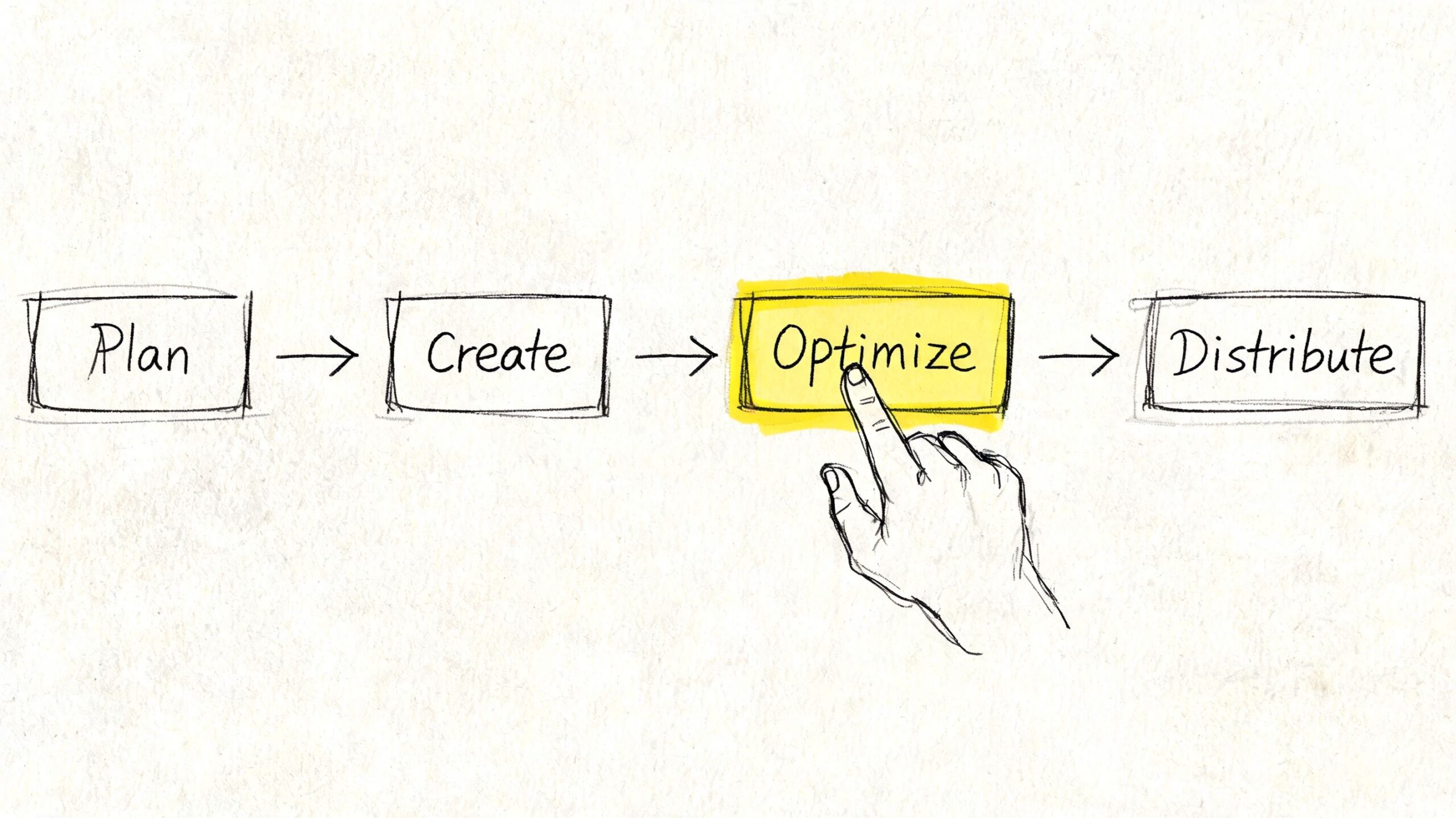
Start with one pillar, not ten blog posts
Most businesses should begin with a pillar page. This is the main resource on a core topic your audience cares about. It should be thorough, well structured, and designed to answer the major questions around that topic in one place.
That structure isn't just neat. It's effective. According to GWI's evergreen content strategy write-up, employing topic clusters, with a central pillar page linking to supporting articles, can lift cluster rankings by 15-25% within 6 months, and longer formats of 2,000-4,000 words rank 2x higher for informational intent.
That makes the choice pretty clear. Don't scatter effort across thin posts. Build one strong hub.
Build the cluster around real buying questions
Once the pillar exists, create supporting pages that go deeper on subtopics. Each one should answer a specific question and link back to the pillar with clear anchor text. The pillar should also link out to those supporting pages where relevant.
A simple cluster might look like this:
- Pillar page: Complete guide to choosing a home security system
- Support article: Wired versus wireless systems
- Support article: What installation typically involves
- Support article: Common mistakes when comparing providers
- Support article: Maintenance checklist for homeowners
This model works because it matches how people search. Some want the broad overview. Others want one narrow answer. Your cluster lets both paths strengthen the same topic.
Internal links should help readers finish a decision, not just satisfy an SEO checklist.
Use a simple editorial calendar
Small businesses don't need a fancy content operation. They need consistency.
Here’s a practical monthly rhythm:
| Week | Primary task | Output |
|---|---|---|
| Week 1 | Research core topic and search intent | Pillar outline |
| Week 2 | Publish pillar page | Main evergreen asset |
| Week 3 | Publish support article | Cluster expansion |
| Week 4 | Refresh older page and re-promote | Maintenance and distribution |
If you have more capacity, add another support article. If you have less, keep the rhythm but slow the volume. The system still works.
Later in the process, this video gives a useful view of how evergreen planning fits broader SEO execution:
Refresh before content decays
Publishing is only half the job. Evergreen content needs upkeep.
A lightweight refresh checklist keeps pages useful:
- Review search intent: Does the page still match what searchers want?
- Update examples: Remove anything dated or unclear.
- Strengthen internal links: Add links to new supporting pages.
- Improve readability: Tighten headings, bullets, tables, and summaries.
- Check conversion paths: Make sure the next step is obvious.
What doesn't work is random rewriting. Keep the core URL and topic stable. Improve the page without turning it into something else. That's how you preserve momentum while making the asset stronger.
Automate and Scale Your Strategy with OutRank
The biggest myth about evergreen content is that it's low-effort. It isn't. It's lower waste.
That distinction matters. A good evergreen content strategy still needs research, production, internal linking, optimization, republishing, and refresh cycles. For a solo founder or a small in-house team, that workload becomes the bottleneck long before strategy becomes the problem.
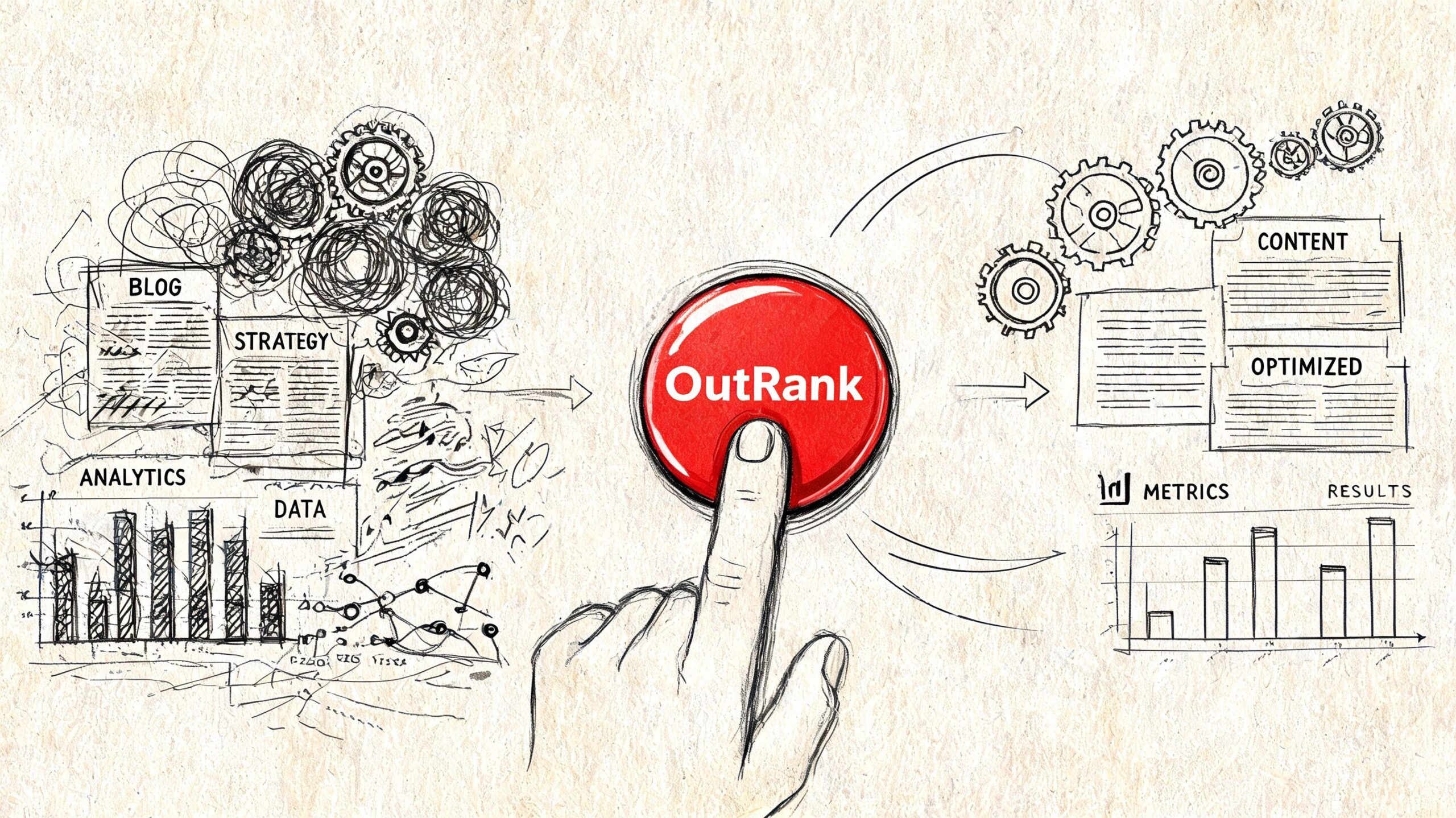
Manual upkeep is where small teams get stuck
At this stage, many content plans frequently falter. The first few articles go live, then daily business pulls attention elsewhere. No one updates old pages. No one expands clusters. No one checks which rankings slipped.
That problem isn't theoretical. Evergreen Feed's analysis notes that evergreen content requires "active maintenance" to preserve authority, as static assets can see 20-30% traffic drops after 12 months, and it specifically frames this as a challenge for SMEs.
If you're running payroll, handling service delivery, and answering leads, manual maintenance usually loses.
What automation should handle
Here, a tool like OutRank becomes useful. Not because it replaces strategy, but because it removes repetitive production work that small businesses struggle to do consistently.
The right automation layer should help with:
- Keyword discovery: surface relevant search opportunities tied to stable intent
- Content production: generate structured drafts at a consistent publishing pace
- Competitor analysis: identify gaps and themes worth covering
- Publishing workflow: reduce the friction between draft and live page
- Update cycles: flag assets that need revision before they slide
For a lean operator, that changes the math. You don't need to build a mini agency inside the business just to keep your evergreen system alive.
Automation should take over repeatable steps. Humans should still decide positioning, accuracy, and commercial relevance.
What not to automate blindly
There are real trade-offs here.
Don't hand your strategy to a tool and assume output equals authority. If your offers are poorly positioned, your topics are off-target, or your internal linking is sloppy, automation will produce more of the wrong thing faster.
Use tools for speed, but keep editorial judgment on these points:
- Topic priority
- Brand voice
- Offer alignment
- Accuracy checks
- Conversion paths
The businesses that win with automation don't abandon discipline. They use automation to protect discipline. That's what makes an evergreen content strategy accessible to small teams instead of just large marketing departments.
Build Your Traffic Engine for 2026 and Beyond
The businesses that get the most from content don't act like publishers chasing constant novelty. They act like asset builders.
That's the key lesson behind an evergreen content strategy. You choose durable topics. You package them in formats that hold up. You structure them into clusters. You maintain them before they lose value. Then you automate the repetitive parts so the system keeps moving even when the team is busy.
This approach is better for ROI because it reduces waste. It is better for SEO because it builds topical depth. It is better for sales because prospects keep finding useful answers at the exact moment they need them. And it is better for small businesses because it doesn't require a giant budget to work.
The trade-off is patience. Evergreen content usually asks for more planning up front and more discipline after publication. But the alternative is the treadmill. More posts, more scrambling, more short-lived spikes, and very little compounding value.
A sustainable traffic engine isn't built from random output. It's built from a repeatable system.
If you want content to keep helping your business months from now, start with one pillar page on a recurring customer problem. Build a cluster around it. Put a refresh date on the calendar. Then use automation where manual effort would otherwise stall the whole process.
If you want a practical, agency-free way to put this into action, Agency Secrets shows small business owners how to build an SEO system around buyer-intent keywords, strong evergreen articles, relevant backlinks, and consistent publishing. It also points you to OutRank, which can automate large parts of that workflow so you can create, publish, and maintain search-driven assets without hiring a full team. Start there, test the system on one core topic, and build your traffic engine from the ground up.
Refined using the Outrank tool