Most backlink advice is backward. It tells small businesses to chase volume, buy placements, or obsess over DA screenshots. That approach burns money and usually builds a backlink profile full of links nobody reads, nobody trusts, and Google can safely ignore.
A better approach is smaller, sharper, and much more realistic if you're running the business yourself. You don't need hundreds of links. You need the right links from relevant sites, useful pages, and real editorial contexts. That's how a solo operator can compete with bigger brands that waste budget on bloated SEO campaigns.
The practical way to get high authority backlinks is to treat link building like business development. Find the right targets. Create one or two assets worth citing. Reach out with a useful reason. Vet every opportunity. Then track whether those links improve rankings, traffic, and leads. That workflow is slower than buying junk links, but it holds up.
Table of Contents
- What Actually Counts as a High Authority Backlink
- Finding Link Opportunities Worth Your Time
- Creating Content That Naturally Earns Links
- The Art of Effective Outreach Without Being Spammy
- Your Link Vetting Checklist To Avoid Penalties
- Measuring ROI and Scaling Your Link Building
- Frequently Asked Questions About High Authority Links
What Actually Counts as a High Authority Backlink
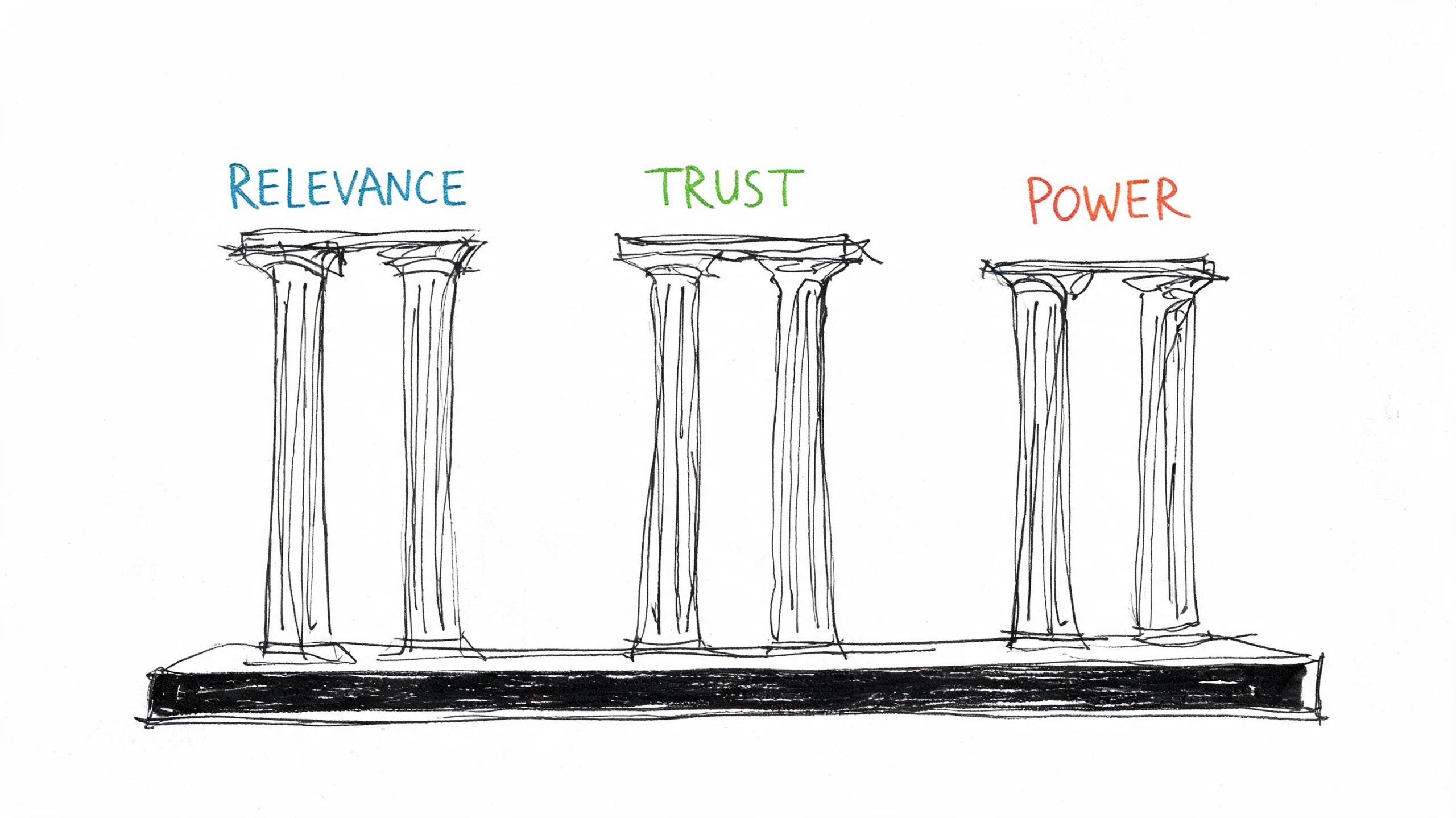
High authority is not a vanity score. It is a link from a site that people in your market trust, placed on a page that makes editorial sense, and strong enough to pass real visibility and credibility to your business.
Authority starts with relevance
A local clinic will usually get more SEO value from a respected healthcare publication than from a high-DR marketing blog. An industrial supplier will usually benefit more from a trade journal than from a broad business site with no subject overlap. Search engines do not treat every strong domain as equally meaningful. Context changes the value of the link.
Metrics still help with screening. They just should not make the decision for you. A useful benchmark is this: high-authority backlinks from sites with DA above 60 to 70 are foundational for SEO, and a single DA 75+ link can equal the value of 5 to 10 links from DA 30 sites, according to Rock The Rankings on high-authority backlinks.
For a solo business owner, the practical definition is simpler than the SEO industry makes it sound:
- Relevant: The site covers your niche, your customer problem, or a close adjacent topic.
- Trusted: The site has real authors, real readers, and content that exists for more than selling links.
- Powerful: The link sits inside the main content of a page that already earns attention and trust.
That is the filter.
If a link would send you qualified referral traffic, strengthen your reputation, or help a prospect trust you faster, it is probably worth pursuing. If it only looks good inside a spreadsheet, skip it.
Trust and placement matter more than raw domain metrics
A DA 70 link in a weak article can be mediocre. A DA 45 link from the right industry site can be excellent. I see small businesses waste money when they buy based on domain score alone and ignore the page, the topic, the anchor text, and the company the link keeps.
Ask basic questions. Is the article indexed? Does the site publish on one topic or dozens of unrelated ones? Do the outbound links look editorial, or do they look rented? Would you be comfortable showing that placement to a customer who is doing due diligence on your business?
That standard keeps you out of trouble and saves budget.
For small businesses, the goal is not to build the biggest backlink profile in the category. The goal is to earn a compact set of links that make your business look like a credible choice in a narrow market. One mention from a trade association, local news site, software partner, or respected niche publisher can do more than twenty low-trust links that never should have been built.
Finding Link Opportunities Worth Your Time
The bottleneck in link building is rarely outreach. It is picking targets that were never realistic in the first place. A solo business owner does not need a list of 500 sites. You need 20 to 30 prospects with a clear reason to care about your business, your expertise, or an asset you can produce without hiring an agency.

Start with competitor patterns, not raw backlink exports
Ahrefs and Semrush are useful here, but the goal is not to download every referring domain and copy it. The goal is to identify repeatable link types you can earn with limited time.
Pull two or three direct competitors. Then sort their links into buckets:
- Resource page links from curated tools, guides, and recommended vendor pages.
- Contributed content links from industry blogs, podcasts, and expert roundup posts.
- Partner links from software vendors, distributors, associations, or complementary service providers.
- Editorial citations where a journalist, publisher, or blogger quoted them or referenced a useful asset.
Then ask one practical question for each link. What caused it?
Sometimes the answer is a decent template. Sometimes it is a founder quote, a local data point, a case study, or a niche page that solved a specific problem better than the generic results already ranking. That cause matters more than the backlink itself, because it tells you what to build and who to pitch.
Small operators can beat bigger brands in this area. Large companies often win on volume. You can win on fit.
Build a short list you can qualify by hand
A prospect is worth your time if you can answer three questions quickly:
- Is the site relevant to your market?
- Is there an obvious page or format where your business belongs?
- Can you explain the value of your inclusion in one or two sentences?
If any answer is fuzzy, skip it.
I would rather see a local accountant work a list of 15 association pages, local business publications, software partner directories, and niche finance blogs than spend a week emailing national publications that will never reply. Relevance and accessibility usually beat prestige when time is tight.
Resource pages and niche lists still produce wins
Resource pages get dismissed because so many bad ones exist. The good ones still work. They are maintained, selective, and built to help a specific audience find credible options.
Search like a customer or editor would search. Use queries tied to your niche plus phrases such as "recommended tools," "helpful resources," "best vendors," "member directory," or "industry association." Then review the page manually.
A strong resource-page opportunity usually checks these boxes:
- The page serves readers first.
- Your page or business fills a real gap in the list.
- The site is active enough that someone may still review suggestions.
Keep the outreach tight. Mention the exact page. Explain what your resource adds. Make it easy for the editor to say yes or ignore you without reading a long pitch.
Weak fit kills response rates faster than weak copy.
Use journalist requests as an ongoing channel
HARO-style outreach is one of the few channels where a solo business owner can get strong editorial links without paying for placement, but it only works if you treat it like a routine. Analysts at Digital Applied's link building strategies found that using HARO can deliver DR 50+ editorial links with a 15 to 25% selection rate for optimized responses. The same analysis found that replying in under 2 hours improved selection odds, and that a brief daily habit can produce links from sites with strong authority signals.
The trade-off is consistency. You may send many useful replies before one lands. That is still a good exchange if the process only takes 20 to 30 focused minutes a day.
Use a simple workflow:
- Choose narrow categories. Only respond where you have direct experience.
- Reply fast. Journalists often use the first credible answers they receive.
- Lead with the quote. Put the usable insight in the first lines.
- Write like an operator. Specific examples beat polished marketing language.
- Keep your byline clean. Name, role, company, website.
If you run a local service business, a small ecommerce brand, or a specialized consultancy, you already have material worth quoting. Client patterns, pricing shifts, operational mistakes, buyer objections, and regional trends are all usable if you explain them plainly.
That is the agency-free advantage. You are closer to the work, so your answers can be more specific, faster, and more useful than generic PR copy.
Creating Content That Naturally Earns Links
A lot of business owners spend too much time chasing links and too little time building pages that deserve them. If the asset is weak, outreach turns into begging. If the asset is useful, outreach becomes simple distribution.
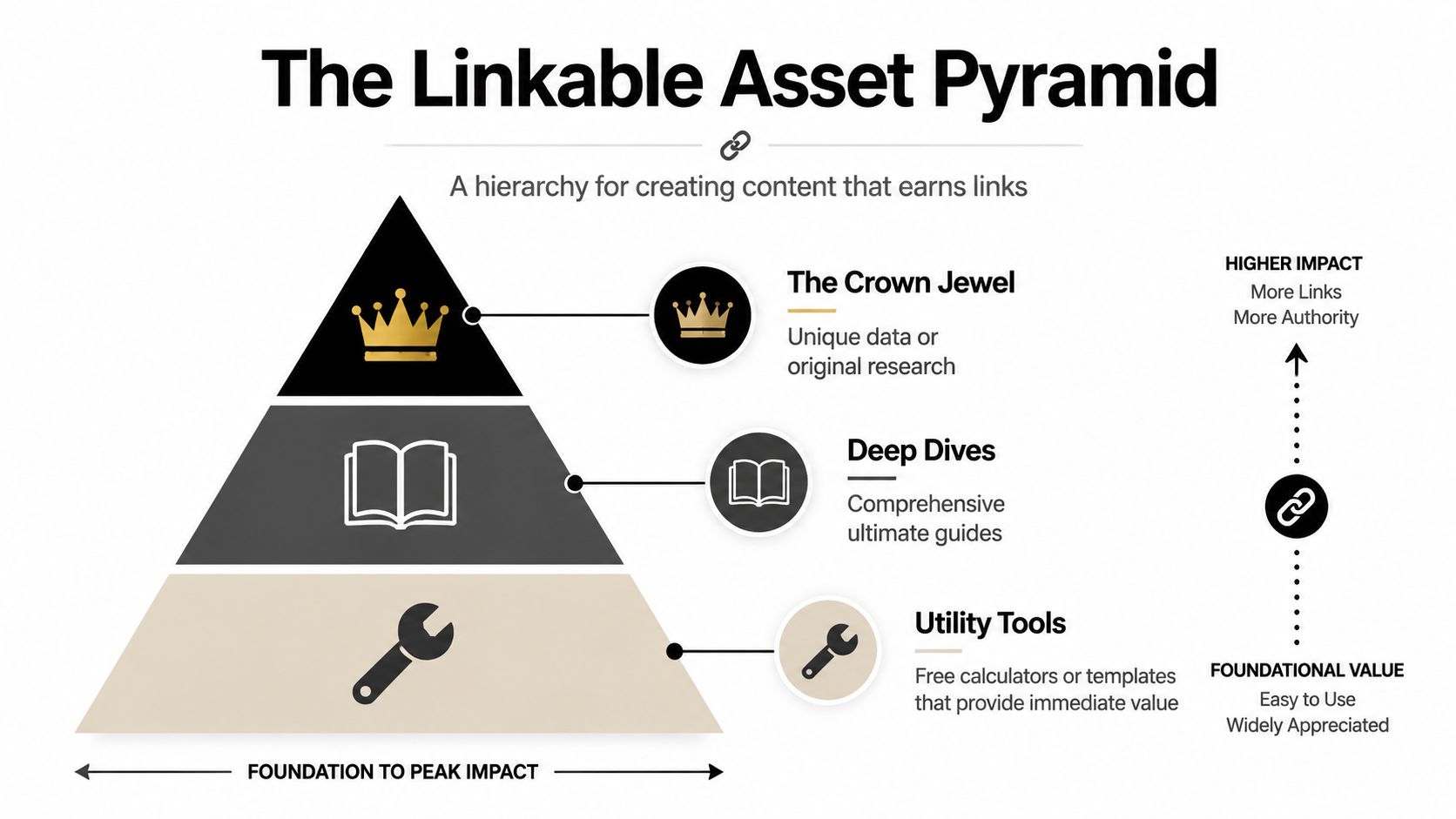
For a solo operator, the goal is not to publish more. The goal is to publish a small set of pages that other sites can cite without hesitation. Good linkable assets usually do one of three jobs. They explain something clearly, help someone complete a task, or add evidence from real-world experience.
The three asset types worth building first
I would start with one asset in each of these categories, then improve them over time instead of constantly creating new posts.
Utility tools are the fastest win. Calculators, checklists, templates, intake forms, scripts, and worksheets earn links because they save people time. A local accountant can publish a quarterly tax checklist. A wedding photographer can publish a shot-list template. A B2B consultant can publish a vendor evaluation worksheet. None of these require a design team.
In-depth guides work when the topic has search demand and weak existing resources. The page needs clear structure, plain-English explanations, examples, and a point of view shaped by actual client work. Publishing a longer article alone is not enough. It has to be the page another writer trusts as a reference.
Original insight pages have the highest ceiling. That does not require a formal study. You can publish a pricing breakdown, a benchmark page, a summary of patterns from sales calls, or a list of recurring mistakes you see in projects. If the insight comes from doing the work, it can earn citations.
Why some pages get cited and others get ignored
Writers, editors, and site owners link for a practical reason. They are usually looking for one of four things:
- Definition support: a page that explains a term without fluff
- Evidence support: a source that strengthens a claim
- Utility support: a tool, template, or checklist readers can use
- Comparison support: a page that helps readers evaluate options
That is why format matters.
A 600-word opinion post rarely earns links unless the author already has a strong audience. A useful calculator can earn links with almost no promotion. A comparison page can attract citations from buyers, bloggers, and service pages if it stays current. A well-structured guide can become the source other writers reference when they need to explain a concept quickly.
That is the agency-free advantage here. You do not need a content calendar packed with twenty article ideas. You need a few assets that are easier to cite than the alternatives.
A practical content mix for small businesses looks like this:
| Asset type | Best use | Why it earns links |
|---|---|---|
| Concept guide | Explain a core topic in your niche | Writers need a clear reference |
| Template or checklist | Help people take action fast | Useful resources get cited |
| Comparison page | Clarify differences between options | Supports buyer research |
| Original observations | Add perspective from real work | Builds credibility and quotable material |
One warning. Do not start with an infographic, a glossy trend piece, or a broad “ultimate guide” unless you already know people in your field want that format. In small-budget link building, practical beats impressive.
The best linkable assets reduce friction for another writer. They explain, prove, or simplify something that writer needs.
A simple workflow works better than chasing content trends:
- List repeated questions. Pull them from sales calls, emails, and customer objections.
- Match each question to an asset type. Explanation, tool, comparison, or insight.
- Build the easiest high-value version first. A checklist often beats a large article.
- Add proof from real work. Screenshots, examples, numbers from your process, or common scenarios.
- Update the page quarterly. Freshness matters more on comparison and data-driven assets.
If time is tight, start with the page another site can cite in one sentence and their reader can use in five minutes.
The Art of Effective Outreach Without Being Spammy
Cold outreach is overrated. Page-specific outreach is what gets links.

A solo business owner does not need to send 500 emails a month. You need 20 to 30 well-chosen prospects, a real reason to contact each one, and a page worth linking to. That is how you compete with bigger teams without burning time on inbox churn.
Editors and site owners ignore outreach for one simple reason. The email creates work instead of removing it. If your message asks them to review a random article, trust your claims, and decide where it fits, you are giving them another task. Good outreach does the opposite. It points to a specific page, a specific gap, and a specific fix.
Start with a reason tied to the page
The strongest outreach angle usually falls into one of four buckets:
- A broken outgoing link on their page
- An outdated recommendation or stat
- A missing resource their readers would use
- A section where your example, quote, or tool improves the article
That is why the Skyscraper Technique can still work. Executed with precision, it can yield a 20 to 40% response rate. But 70% of campaigns fail because the pitches are generic. Showing a side-by-side comparison of value can boost replies by 35% or more, according to Search Logistics on link building statistics.
The useful lesson is not "copy this tactic." It is simpler than that. Show why your page helps their reader more than what is there now.
Before you email anyone, write down your reason in one sentence. If you cannot explain the fit that clearly, skip the prospect.
Write like a person who noticed something useful
Short emails work because they respect attention, not because they are clever. Keep the note specific, easy to scan, and low pressure. I tell clients to remove anything that sounds like a compliment written for ten other websites.
Use these as starting points, then customize them.
Broken link replacement
Subject: Broken link on your [topic] page
Hi [Name],
I was reading your page on [topic] and noticed one resource in the [section name] appears to be broken.
If you're updating it, I have a current guide on [topic] addressing the same angle here: [Your Page]
If it's useful, feel free to swap it in. Either way, I thought you'd want to know about the broken link.
Best,
[Your Name]
Resource page suggestion
Subject: Possible addition to your [page title]
Hi [Name],
I found your resource page for [audience/topic] and saw you list tools and guides for [specific use case].
We published a [guide/template/tool] on [topic] that could fit the [relevant section] because it helps readers [specific value].
If helpful, I can send the direct link and a one-line summary for quick review.
Thanks,
[Your Name]
Two small details improve reply rates. Use the recipient's page title or section name so they know you looked. Then make the ask easy to evaluate in under 30 seconds.
One more thing helps. Study examples before you start sending emails.
Follow up without becoming a nuisance
A lot of good pitches get missed the first time. Inbox timing is messy. People save things and forget them. That is normal.
The fix is a short follow-up sequence, not a bigger sales routine.
- First email: State the page, the issue or opportunity, and your suggested resource.
- Second email: Send a brief follow-up a few days later. Mention the same page and keep it to one or two sentences.
- Third email: Close the loop. Give them an easy out and stop there.
A clean follow-up looks like this:
Just checking in on this resource suggestion for your [page/topic] page. If it's not a fit, no problem at all.
That works because it sounds like a professional note, not a campaign trying to squeeze one more reply out of a list.
The agency-free way to handle outreach is boring on purpose. Build a short prospect list. Match each site to one useful asset. Send personalized emails. Track replies in a simple spreadsheet. Keep the angles that get traction, and drop the ones that waste your week.
Your Link Vetting Checklist To Avoid Penalties
A decent outreach campaign can still create problems if you say yes to the wrong sites. Many business owners are harmed at this stage. They finally get traction, then accept links from sites that exist mainly to sell links.
A good link prospect passes a common-sense test
Don't overcomplicate vetting. Open the site and ask basic questions. Does it look like a publication someone reads? Are there named authors? Are the articles coherent? Do outbound links feel selective, or does every post push to unrelated businesses?
Then use your tools. Ahrefs, Semrush, and even a manual Google search can tell you a lot. You're looking for topical consistency, signs of organic visibility, and pages that appear to serve users first.
The strongest prospects usually share these traits:
- Editorial clarity: Articles have a purpose, not just filler paragraphs around a link.
- Relevant topic coverage: The site regularly publishes in your niche or a close adjacent one.
- Reasonable outbound linking: It doesn't spray links to casinos, crypto schemes, payday loans, or unrelated software in every post.
- Healthy publishing pattern: New content appears, old content still exists, and the site doesn't look abandoned.
If a site looks like it was built for link sellers, treat it that way.
Link Vetting Checklist
| Check | What to Look For (Green Flag) | What to Avoid (Red Flag) |
|---|---|---|
| Relevance | The site covers your industry or a tightly related topic | The site publishes on every topic under the sun |
| Editorial quality | Named authors, readable articles, clear standards | Thin content, anonymous posts, obvious AI slop |
| Link placement | Link appears naturally in the article body | Footer, sidebar, author bio, or forced paragraph insertion |
| Outbound profile | Selective links to credible businesses and sources | Frequent links to spammy or unrelated industries |
| Site health | Consistent publishing and signs of real readership | Abandoned blog, broken pages, erratic updates |
| Intent | The placement makes sense for readers | The page exists mainly to host outbound links |
Red flags that should end the conversation
Some prospects don't deserve a second thought. Walk away if you see patterns like these:
- Topic mismatch: A site about fashion wants to link to your B2B accounting page.
- Paid-placement language: The editor immediately offers "dofollow packages" across multiple sites.
- Recycled guest posts: Every article follows the same template with different anchor text.
- Sketchy neighbors: The site links to industries you wouldn't want your brand near.
- No real standards: The publisher accepts anything as long as someone pays.
The safest mindset is simple. If you'd be embarrassed to show the site to a customer, don't want the link.
Measuring ROI and Scaling Your Link Building
A link is only valuable if it improves a page that matters to the business.
Small business owners get into trouble when they measure link building by volume. Ten new links can look productive in a report and still do nothing for rankings, leads, or sales. The better approach is simpler. Tie every link effort to a page with a job to do, then check whether that page gained more visibility, better traffic, or more conversions over time.
Track the signals that connect to revenue
Start with four numbers:
- Referring domains to your money pages
- Ranking movement for the linked page
- Referral traffic from the linking site
- Leads or sales assisted by organic visits to that page
That gives you a practical scorecard without turning this into a data project.
Google Search Console shows whether impressions and clicks are rising. Google Analytics shows whether the page attracts useful visits and assists conversions. Your SEO tool helps you confirm whether the page is gaining stronger referring domains over time. For a solo operator, that is enough to spot whether the work is paying off.
Patience still matters. Link building usually pays back over months, not days. A strong placement on the right site can support rankings long after the outreach work is done, especially if it points to a commercial page or a linkable asset that feeds internal authority to revenue pages.
Review links at the page level, not just the domain level
This is the part many small businesses skip.
Do not ask, "Did link building work?" Ask, "Did links to page A improve page A's performance enough to justify the time spent getting them?" That question is much easier to answer, and it helps you stop wasting effort on pages that were never likely to produce business value.
A simple monthly review works well:
- Pick the 5 to 10 pages you actively built links to
- Compare current rankings against the previous month
- Check organic clicks and assisted conversions
- Note any new referring domains to each page
- Flag pages that improved, stalled, or declined
After two or three cycles, patterns show up. Some pages respond quickly to a few strong links. Others need better on-page work, stronger search intent alignment, or a better offer before more links will help.
Scale the parts that do not require your judgment
A solo business owner should keep control of the work that affects quality. That means choosing targets, deciding the angle, writing or editing the outreach that needs a human touch, and building real publisher relationships.
The repeatable tasks can be systemized:
- prospect collection
- contact research
- content briefs
- asset updates
- reporting
- internal linking support
I usually advise owners to build one repeatable link workflow before trying to expand. For example, if resource page outreach is producing decent links at a reasonable time cost, keep that engine running before adding digital PR, guest posts, and broken link campaigns on top of it. One process executed consistently beats four half-finished tactics.
Scaling link building without an agency usually means getting more selective, not doing more. Cut low-response prospect lists. Reuse winning outreach angles. Update the assets that already attracted links instead of constantly publishing from scratch. Protect your time for the small set of actions that earn placements.
Frequently Asked Questions About High Authority Links
Are high authority backlinks always expensive
No. The expensive route is usually the shortcut route, paid placements on sites that exist to sell links. A solo business owner does better by earning links through useful assets, partner mentions, resource pages, journalist requests, and broken link outreach. The cash cost can stay low. The actual cost is time, follow-up, and choosing opportunities carefully.
Should you care about DA and DR
Use DA and DR to filter prospects fast, then move on.
They are screening metrics, not decision-makers. A relevant link from a well-run niche site often does more for rankings and qualified traffic than a higher-metric link from an off-topic site with weak editorial standards. Check the site, the page, and the context of the link before you spend an hour on outreach.
How long does link building take
Longer than most owners expect.
High-quality links usually come from repeated outreach, better assets, and steady relationship-building, not one clever email. That is why solo operators need a process, not a pile of tactics. Pick a page worth promoting, build a short list of strong prospects, send useful outreach, track what earns replies, and keep improving the asset. Done right, link building compounds, but it rarely pays off in a week.
Should you buy backlinks
I would not build a small business SEO strategy around bought links. The risk is not just Google penalties. It is wasting money on links that never move rankings, never send traffic, and sit on sites with no real audience.
If you have budget, put it into assets people want to reference, cleaner outreach, and better prospect research. That gives you something you can keep using next month instead of starting over.
What's the best first step if you're doing this alone
Start with one page.
Choose the page that already has business value, a service page, a strong guide, or a useful local resource. Improve it until another site has a real reason to cite it. Then build a short target list using competitor backlinks, relevant resource pages, and media request platforms. One page with a clear angle and focused outreach beats ten pages with weak positioning.
If you want a practical, agency-free SEO system instead of random tactics, Agency Secrets is a smart place to start. It shows small business owners how to combine keyword research, content production, high authority backlinks, and evergreen SEO into one workflow, with OutRank handling much of the heavy lifting so you can stay focused on the parts that need your judgment.
Leave a Reply