
You know the pattern. Your techs do solid work, your repeat customers trust you, and your schedule should be fuller than it is. Then you search your own shop name, or worse, “brake repair near me,” and a weaker competitor is sitting above you in Google Maps with more reviews, a cleaner website, and a better online footprint.
That gap usually isn’t about who fixes cars better. It’s about who built the better local search system.
SEO for auto repair shops works when it’s tied to how drivers buy. They search on their phones, compare a few options fast, scan reviews, tap to call, and book with the shop that looks trustworthy and easy to reach. In 2026 local search benchmarks for auto repair shops, mobile devices account for 65-80% of organic search sessions, according to Authority Specialist’s auto repair SEO statistics. If your site is clunky on mobile or your profile is incomplete, you’re losing people before they ever ask for a quote.
Most shop owners don’t need another generic marketing checklist. They need a playbook that gets them more calls, more appointments, and more cars in the bays without turning them into full-time marketers. That’s what this is.
Table of Contents
- Your Blueprint for Local SEO Success in 2026
- Dominate Google Maps with Your Business Profile
- Build a Website That Converts Searchers into Customers
- Automate Content and Links to Build Authority
- Lock Down Your Local Reputation and Citations
- Essential Technical SEO Checks for Your Shop Website
- Measure What Matters and Refine Your Strategy
Your Blueprint for Local SEO Success in 2026
Most shops don’t have an SEO problem. They have a focus problem. They spread effort across random blog posts, half-finished profile updates, and broad homepage copy that tries to rank for everything from oil changes to engine rebuilds on one page.
The better approach is simpler. Build your local presence in layers. First, lock down your Google Business Profile. Second, give every core service its own page. Third, publish useful supporting content. Fourth, strengthen trust with reviews, citations, and technical cleanup. Then track calls, direction requests, and bookings so you know what’s effective.
That order matters because local SEO for a repair shop isn’t won by traffic alone. It’s won by being visible at the exact moment someone needs brakes, diagnostics, tires, AC work, or routine maintenance nearby.
Practical rule: If a tactic doesn’t help a local driver find you, trust you, or contact you faster, it’s probably not a priority for your shop.
There’s also a real trade-off between doing everything manually and doing what will get done. Shop owners are busy. Service managers are busy. If your SEO plan depends on somebody remembering to publish articles, update links, request reviews, and audit pages every week, it usually stalls.
A working system for seo for auto repair shops needs three traits:
- Clear service targeting: Each money-making repair category needs its own destination page.
- Local proof: Reviews, profile completeness, and citation consistency need to support what your website claims.
- Operational consistency: Content, updates, and authority building need a cadence you can maintain.
The shops that win don’t always have the biggest brand. They usually have the cleanest execution.
Dominate Google Maps with Your Business Profile
Monday morning, a driver hears grinding brakes on the way to work and searches “brake repair near me.” Your shop shows up in the map pack beside two competitors. At that point, ranking helps, but the profile that looks complete, current, and trustworthy usually gets the call.
I treat Google Business Profile like a second homepage for auto shops. In many cases, it gets checked before the website. Drivers want fast answers. Can this shop handle my problem, is it open, and does it look credible enough to trust with my car?
A claimed profile with a phone number is not enough. The shops that pull more calls usually have tighter category targeting, fuller service lists, better photos, and recent activity that shows the business is open and paying attention. That matters even more for busy owners who do not have time to babysit marketing every week. This is one of the best places to use AI and automation well. Use it to draft Google Posts, turn common front-desk questions into Q&A entries, and build a monthly checklist your team can follow.
Treat your profile like a front counter that sells
Start with the fields that shape relevance and trust.
- Choose the right primary category: For most shops, that means selecting the category that matches the core business, not the broadest label available. Secondary categories should reflect real revenue lines such as brake service, oil change service, transmission shop, tire shop, or auto air conditioning service if those fit the business.
- Write a useful business description: Say what the shop does, which vehicles it works on, and what makes the operation credible. Mention diagnostics, scheduled maintenance, fleet work, diesel repair, or European vehicles only if those are real strengths.
- Build out the services list: Add each major service a customer might search for. Brake repair, check engine light diagnostics, suspension repair, wheel alignment, AC service, battery replacement, tire replacement, and transmission service should not be missing if you sell them every week.
- Upload current photos: Show the storefront, service bays, waiting area, scan tools, alignment rack, technicians, and finished work. Fresh photos do two jobs. They improve trust with searchers and give Google more signals that the business is active.
- Seed your own Q&A: Put common pre-appointment questions in place before random users do it for you. Cover warranty terms, towing, shuttle service, after-hours key drop, financing, same-day appointments, and whether you service specific makes.
Shops ask about Google Posts all the time. They help most when they support buying intent, not when they read like filler. Post about seasonal AC inspections before summer, battery testing before winter, holiday hours, or a short explanation of what a brake inspection includes. Skip generic “Happy Monday” updates. They do nothing for calls.
A quick walkthrough helps if you haven’t touched your profile much lately.
What to update every month
A Google Business Profile does not need constant tinkering. It needs clean maintenance and quick response times.
| Area | What good looks like | Common mistake |
|---|---|---|
| Photos | Fresh shop, team, and service photos | Same old storefront image for months |
| Hours | Standard and holiday hours are accurate | Wrong holiday hours |
| Services | Service list matches what you actually sell | Missing profitable services |
| Q&A | Common buyer questions answered | Leaving public questions unanswered |
| Posts | Timely updates tied to real offers or service needs | Posting generic motivational content |
For busy shops, I recommend assigning this to a simple monthly workflow. Have AI draft the post, suggest new Q&A ideas from recent phone calls, and flag missing photos or outdated hours for approval. The owner or service manager still reviews the final updates, but the prep work gets done faster. That trade-off matters. Manual SEO plans often die in the service lane.
A strong Google Business Profile helps a rushed driver decide to call you in under a minute.
Keep the priority straight. A polished profile gets you shortlisted in Google Maps. Reviews, accurate service details, and a credible website are what turn that visibility into booked work.
Build a Website That Converts Searchers into Customers
A driver searches "brake repair near me" from a phone in your parking lot, lands on your site, and still does not call. That usually comes down to one problem. The page does not match the service they need, or it makes the next step harder than it should be.
For auto shops, website SEO is not about publishing more pages for the sake of volume. It is about building the few pages that line up with high-intent searches and turn that visit into an appointment request or phone call. Shops that are short on time can use AI to speed up page drafts, pull common customer questions from call logs, and keep service copy current. The owner still approves the final version. The time savings are what keep the plan running.
Use one service per page
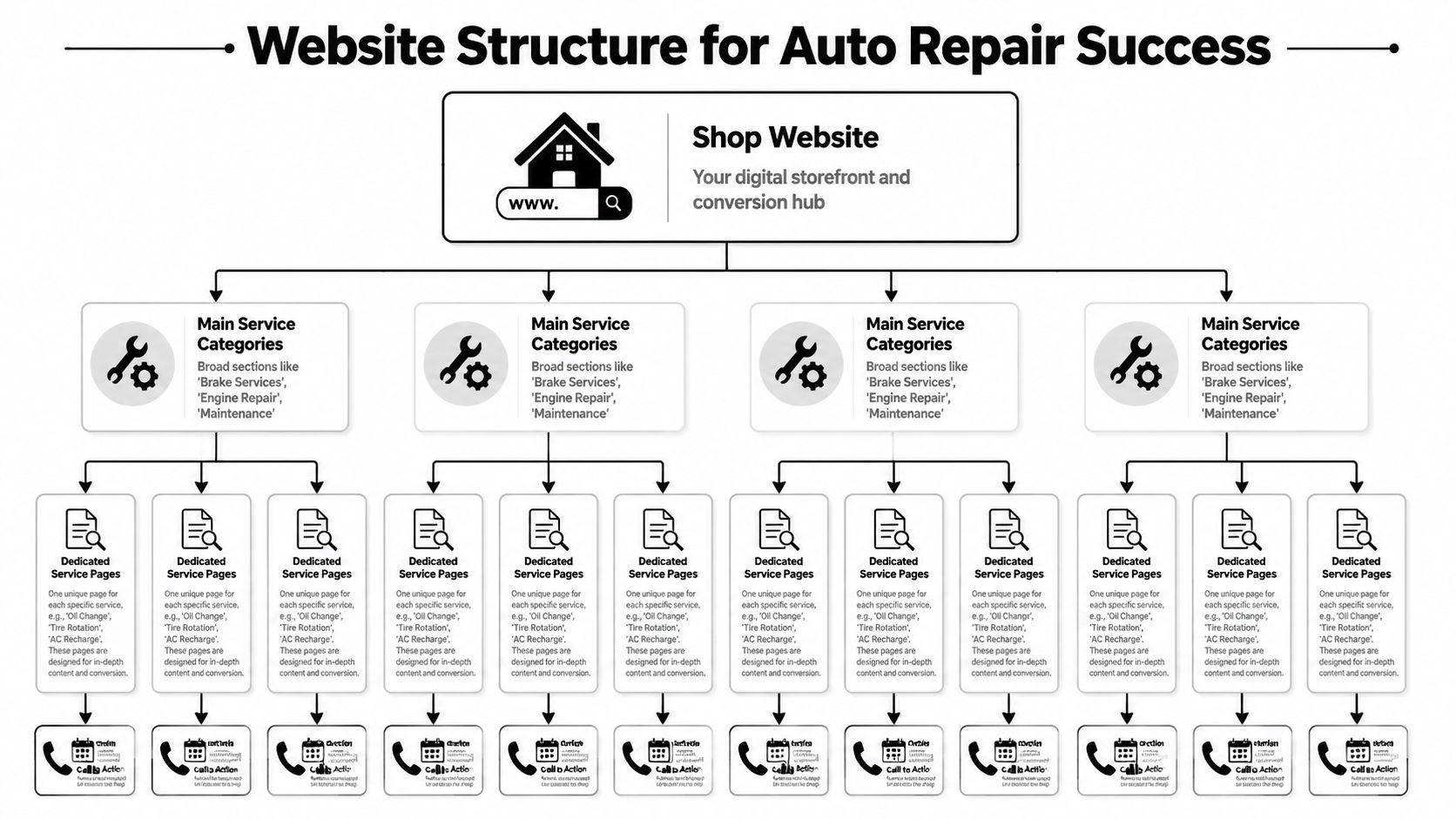
A single "Services" page forces Google and the customer to do too much work. If you want to show up for brake repair, oil changes, engine diagnostics, AC recharge, transmission service, and suspension work, each service needs its own page.
That structure works because it matches how people search.
A brake page should focus on brake problems, warning signs, inspection steps, repair options, and how to book. An oil change page should speak to maintenance intervals, oil types, filter replacement, and wait time. Those are different searches with different buying intent, even if both happen in the same shop.
Thin location pages with swapped city names are still common in this industry, and they still underperform. A useful service page answers the questions a real customer asks before calling. What does the noise mean? Is the car safe to drive? What does your inspection include? Do you work on my make?
Here is a page hierarchy that fits most independent shops:
- Homepage: Brand, primary location, trust signals, and immediate contact options
- Main service category pages: Broad areas like maintenance, diagnostics, brake service, and engine repair
- Dedicated service pages: Specific jobs such as oil change, check engine light diagnostics, brake pad replacement, and AC recharge
- Contact and appointment pages: Clear paths for customers who are ready to book
What a high-converting service page needs
The best service pages rank because they are specific. They convert because they reduce doubt.
Every core service page should include:
A precise title and H1
"Brake Repair in Austin" tells both Google and the customer what the page covers.A first paragraph that matches the search
Someone who searched for engine diagnostics wants a repair answer fast, not a long intro about your company's history.Service details in plain language
Explain what the service includes, what symptoms usually lead to it, and what the customer should do next.Proof that your shop is trustworthy
Warranties, certifications, technician experience, review snippets, brands serviced, and years in business all help.A visible CTA above the fold and again near the bottom
"Call now," "Request an appointment," and "Schedule an inspection" work because they are direct.Mobile-first contact options
Tap-to-call buttons, short forms, map access, and hours should be easy to find on a phone.
One trade-off matters here. Long pages can rank well if they answer real questions, but they still need to get to the point fast. I usually front-load the page with the problem, the service, trust signals, and the CTA, then use the rest of the page to handle objections and support the ranking.
AI can help here too. It can turn service advisor notes, review themes, and recorded FAQs into draft copy for each service page, which cuts production time without forcing your team to write from scratch. That matters for busy shops with ten profitable services and no marketing department.
If your phone number is buried, your forms ask for too much information, or your key service pages sit three clicks deep in a menu, fix that first. Rankings help. Easy booking gets the job.
Automate Content and Links to Build Authority
Content and link building are where most shop SEO plans die. Not because they’re unimportant, but because they take time your team doesn’t have. The owner isn’t going to become a part-time publisher. The service writer isn’t going to research keywords between customer calls.
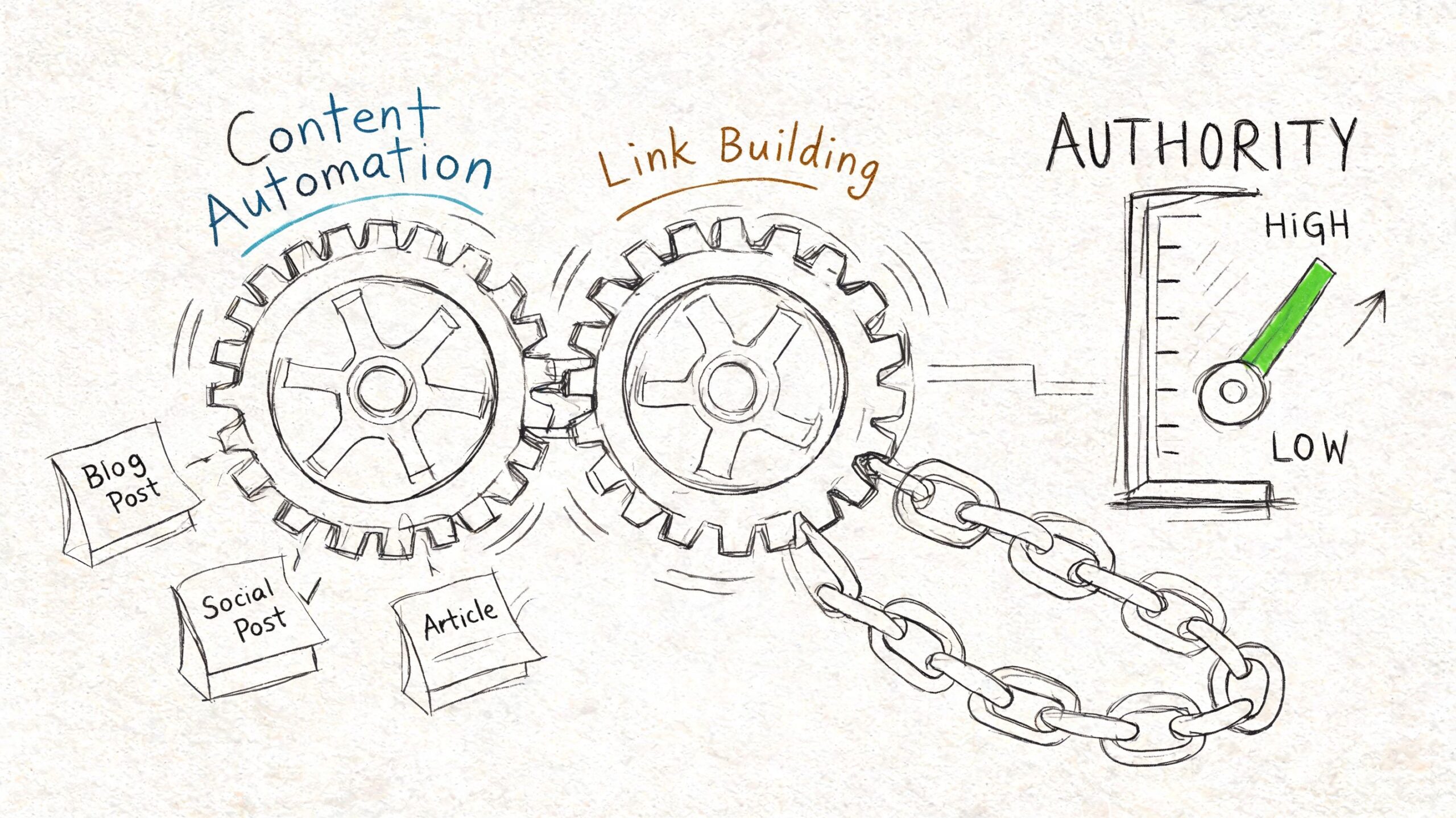
That’s why automation matters now. It isn’t a shortcut around strategy. It’s a way to execute strategy consistently.
Manual content breaks down fast
Most shops know they should publish useful content. They just never get around to it. The result is a website with a few service pages, an outdated blog, and no support around the questions drivers search.
That leaves easy authority on the table. Content topics for auto shops are practical and repetitive in a good way. Drivers ask the same things every week:
- Maintenance timing: When should I get an oil change?
- Warning signs: What does a grinding brake noise mean?
- Urgency questions: Can I drive with the check engine light on?
- Cost framing: What affects the price of AC repair?
- Seasonal concerns: Why does my battery keep dying in cold weather?
Recent data reports that AI SEO tools have generated over 750k articles with 4.7 ratings, enabling small businesses to publish 30 optimized posts per month and secure high-authority backlinks, driving up to 3x traffic growth for local services in 2025-2026 benchmarks, according to Auto Repair SEO’s report on common shop SEO mistakes and AI-driven execution.
What to automate and what to keep human
Many often stumble at this point. They either reject AI entirely or let it publish generic junk. Neither approach is smart.
Use automation for repeatable production work:
- Keyword clustering: Group related questions around brakes, maintenance, diagnostics, tires, and AC service.
- Draft generation: Create first drafts for FAQ posts, maintenance explainers, and local support content.
- Publishing workflows: Keep content going out on a schedule instead of in random bursts.
- Backlink outreach support: Surface relevant opportunities and standardize outreach steps.
Keep human review on the parts that shape trust:
- Local accuracy: Make sure your city, service area, and actual offerings are correct.
- Shop voice: The content should sound like your shop, not a generic automotive encyclopedia.
- Offer positioning: Mention what makes your process better, faster, more transparent, or more convenient.
- Compliance and quality control: Remove vague claims and make sure advice is technically sound.
If your competitors still rely on occasional manual blog posts, consistent automation becomes an unfair advantage.
The trade-off is simple. Manual work can be better when a subject is highly specialized, but it usually happens less often. Automated workflows can scale fast, but only if someone sets standards and reviews output. For most independent shops, the right answer is a hybrid system. Let automation handle volume and consistency, then have a human tighten the details that affect trust and conversions.
Lock Down Your Local Reputation and Citations
You can have a strong profile and solid pages and still lose the click if your reputation signals are weak. In local search, drivers make snap decisions. They compare ratings, scan recent feedback, and look for signs that your shop is active and reliable.
Reviews and citations do different jobs, but both build trust. Reviews help convince people. Citations help confirm that your business information is consistent across the web.
Build a review request system your front desk will actually use
The mistake most shops make is treating review requests as optional. They ask when they remember, usually after a great interaction, then go quiet for a week. That creates uneven momentum.
A better system is simple and repeatable.
- Ask at the right moment: Right after a successful pickup or follow-up call, when the customer is relieved and satisfied.
- Use one link everywhere: Put the same review request link in texts, emails, invoices, and follow-up messages.
- Train the counter staff: Give them one natural sentence they can use every time.
- Reply to every review: Thank happy customers and respond calmly to complaints with specifics and professionalism.
Here’s a response style that works well:
Thanks for trusting us with your vehicle. We appreciate the feedback and are glad we could help.
And for a negative review:
We’re sorry the visit didn’t meet expectations. We take that seriously and would like to review what happened and make it right.
Keep the tone human. Don’t argue in public. Don’t copy and paste robotic responses.
Keep your citations boring and consistent
Citations are mentions of your name, address, and phone number on business listings, directories, maps, and industry sites. This is not a creative task. It’s a consistency task.
Your shop details should match exactly across your website, Google Business Profile, Apple Business Connect, Bing Places, Yelp, and relevant automotive directories. If one listing says “Suite B,” another drops it, and a third has an old phone number, you create trust friction for both search engines and customers.
Use this cleanup checklist:
| Citation item | What to check |
|---|---|
| Business name | Same spelling everywhere |
| Address | Same formatting everywhere |
| Phone number | One primary local number |
| Website URL | Correct canonical homepage or location page |
| Hours | Match current operating hours |
| Categories | Relevant to your actual services |
A few shop-specific directories can also help if the listings are accurate and complete. What matters most is not how many you build in a rush. It’s whether your core listings are clean, duplicate-free, and maintained.
If you’ve changed locations, phone numbers, or branding, citation cleanup becomes urgent. Old data lingers for a long time and confuses both ranking systems and customers trying to contact you.
Essential Technical SEO Checks for Your Shop Website
A shop owner usually notices technical SEO when the phone goes quiet after a site redesign. Rankings slip, mobile visitors hit the page, the tap-to-call button loads late or the form breaks, and those searchers move to the next shop. That is the version of technical SEO that matters for auto repair. It affects calls, appointments, and direction requests.
For most local shops, the work is straightforward. Get the site fast enough on mobile, remove friction from key actions, and make your business details easy for Google to read. AI tools can speed up the audit process by flagging broken schema, large images, slow templates, and indexing issues in minutes, which is useful if you do not have time to hunt through reports yourself. The fix still needs human judgment. A busy brake repair page matters more than a blog post nobody visits.
Fix the issues that block calls first
Start with page speed on your money pages. If your oil change, brake repair, check engine light, or transmission service pages drag on mobile, you lose high-intent traffic before the page has a chance to convert. Focus on Core Web Vitals, but do not treat them like a trophy. The practical goal is simple. Your main service pages should load quickly enough that someone on a phone can read, tap, and call without waiting.
Mobile usability comes next, and many shop sites fall short here. I regularly see websites that look fine on desktop but force mobile visitors to pinch the screen, fight a sticky popup, or scroll past a giant hero image before they can contact the shop. That is not a design issue. It is lost revenue.
Check these items on an actual phone, not just in a browser preview:
- Tap-to-call buttons appear above the fold
- Forms are short and submit cleanly
- Menus open without covering the whole screen
- Text is readable without zooming
- Maps, hours, and location details are easy to find
Then add LocalBusiness schema and keep it accurate. Schema gives search engines a cleaner read on your shop name, location, hours, phone number, and services. It will not fix weak local SEO by itself, but it supports the rest of the signals you are already building.
Your website needs to help a stressed driver call you fast. Fancy effects do not help if the page is slow or the contact path is clumsy.
Give your developer a short, specific ticket list
Vague requests produce vague results. Send a punch list tied to lead generation.
- Speed: compress oversized images, delay nonessential scripts, and improve load times on service and location pages
- Mobile UX: test tap targets, menu behavior, form fields, and click-to-call buttons on real devices
- Schema: add valid LocalBusiness markup to the homepage and location pages
- Indexing: make sure important service pages are crawlable, indexable, and included in the sitemap
- Security: keep the site on HTTPS and fix mixed-content warnings
- Internal linking: connect related services naturally so Google and users can move between them
If you manage the site in-house, use PageSpeed Insights, Google Search Console, and Google’s Rich Results Test to catch the obvious problems. AI site audit tools can help prioritize the list so you are not wasting hours on minor warnings. Fix the pages that drive calls first. For most shops, that means service pages, location pages, and the contact page.
Measure What Matters and Refine Your Strategy
Monday starts the same way at a lot of shops. The bays are full, the phone rang all weekend, and the owner still has no clear read on whether SEO is producing brake jobs, diagnostics, or transmission work. A traffic chart does not answer that. Booked work does.
The shops that improve fastest track lead signals tied to revenue, then use that data to decide what to fix next. If a location page gets more impressions but calls stay flat, the issue is probably conversion. If GBP calls rise after new reviews and fresh photos, keep pushing there. Good reporting should tell you where the next appointment is coming from and where the bottleneck is.
Track revenue signals, not vanity metrics
For an auto repair shop, the core question is simple. Did search visibility turn into calls, direction requests, and appointments?
Use three tools as your baseline:
- Google Business Profile insights for calls, views, and direction requests
- Google Analytics 4 for form submissions, call clicks, and the pages that drive leads
- Google Search Console for keyword impressions, clicks, and page-level visibility
Here’s the KPI set I watch for local shop campaigns:
| KPI | Why it matters |
|---|---|
| Calls from GBP | Strong signal that map visibility is producing high-intent leads |
| Direction requests | Good proxy for local buying intent and walk-in demand |
| Appointment form submissions | Direct website lead volume |
| Rankings for core service keywords | Visibility for pages tied to revenue |
| Top landing pages | Shows which services and locations attract real demand |
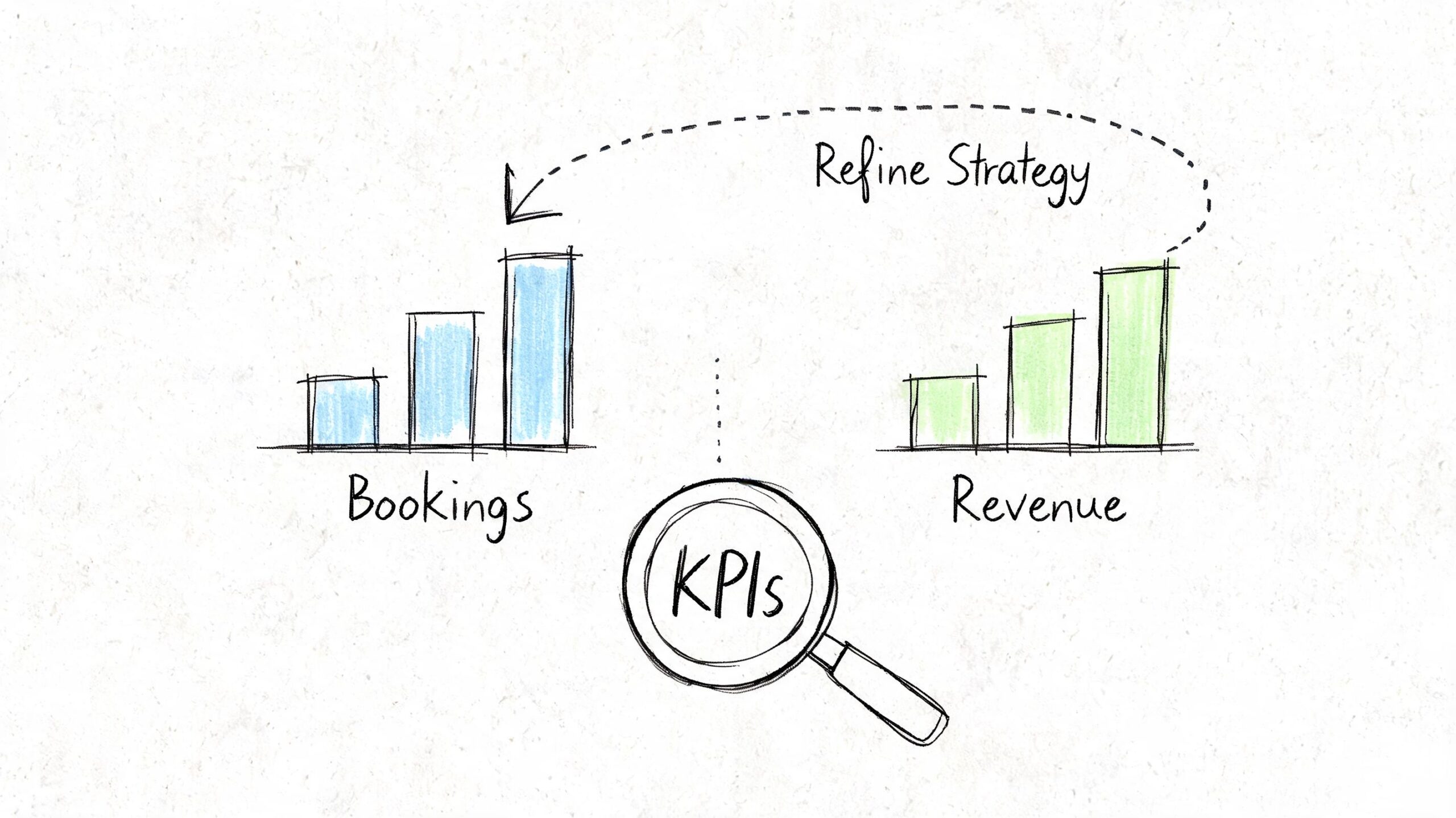
A shop owner does not need a custom dashboard with 40 widgets. They need a short scorecard they can review in 10 minutes. That is where AI helps. Instead of pulling reports by hand, use automation to summarize month-over-month movement, flag drops on money pages, and surface patterns like "oil change page up, AC repair page down, GBP calls flat." Busy owners usually do not skip SEO because they disagree with it. They skip it because reporting takes too much time.
Run a monthly review loop
Monthly is enough for most independent shops. Weekly checks make sense if you run aggressive promotions or manage multiple locations, but for a single shop, a disciplined monthly review catches the important shifts without turning SEO into a second job.
253 Media’s local SEO results for auto repair shops show what happens when a shop sticks with a consistent process over time. Rankings improve, calls increase, and paid ads become less necessary for every lead.
Use this review loop:
Check lead volume first
Review GBP calls, direction requests, appointment forms, and call clicks from the site.Review the pages tied to real jobs
Look at brake repair, check engine light diagnostics, AC repair, transmission service, and your top location pages. Those pages should carry the campaign.Compare visibility against outcomes
If rankings improved but leads did not, strengthen the page. Add clearer service details, trust signals, financing info, stronger calls to action, or better mobile contact options.Update one underperforming asset
Refresh a weak service page, add new before-and-after photos to GBP, tighten title tags, or expand a thin page that gets impressions but few clicks.Queue the next month’s work with automation
Use AI to draft page updates, pull review themes into on-page copy, generate FAQ ideas from Search Console queries, and prepare content briefs without spending half a day in spreadsheets.
That last step matters more than many owners realize.
A lot of SEO campaigns stall because the review happens, but nothing ships after it. The best system is the one your shop can keep running while managing technicians, parts delays, and front desk traffic. AI does not replace strategy. It handles the repetitive execution so the strategy gets carried out.
If one page starts producing calls, build around it. Add related FAQs. Strengthen internal relevance on the page itself. Create supporting content that answers adjacent search intent, like "why does my car shake when braking" or "how long does AC repair take." If a page gets impressions but no leads, fix the offer and contact path before chasing more traffic.
If you want a practical way to execute this without hiring an agency or building a content team, Agency Secrets is worth a look. It lays out a clear SEO playbook for small business owners and pairs it with OutRank, which helps automate keyword research, article production, publishing, and backlink workflows so your shop can keep building organic visibility while you stay focused on running the business.