Most SEO advice still pushes small businesses toward the biggest keywords in the room. That's backwards.
If you're a local service business, solo founder, ecommerce operator, or lean in-house marketer, you probably don't lose in search because your product is worse. You lose because you're trying to compete on terms built for companies with bigger sites, larger teams, and stronger backlink profiles. Going after broad keywords too early burns time, drains budget, and usually ends with a page stranded far from page one.
The underdog play is different. You win by being more precise. You target the phrases larger competitors ignore, the ones tied to specific problems, narrow use cases, and clear buyer intent. That's how smaller sites start ranking, earn trust, and build momentum without hiring an agency.
Table of Contents
- Why Chasing High-Volume Keywords Is a Losing Game
- What Makes a Keyword Low Competition
- A Practical Workflow for Discovering Hidden Gem Keywords
- Validating Keywords for Profit Not Just Traffic
- Content and Link Building for Low Competition Terms
- How to Automate and Scale Your Keyword Strategy
Why Chasing High-Volume Keywords Is a Losing Game
Small businesses get trapped by search volume.
A founder opens a keyword tool, sees a giant term in the niche, and assumes that's the prize. So they publish a page for something broad like "marketing software," "plumber," or "project management app." Then they wait. And wait. Meanwhile, the search results are crowded with massive brands, old domains, layered content hubs, and backlink-heavy pages that have been accumulating authority for years.
That isn't a content problem. It's a strategy problem.
Broad keywords look attractive because they suggest scale. But for a smaller site, they often create the worst mix possible: vague intent, strong competition, and a long path to any meaningful return. Even if you do rank someday, the traffic can be messy because broad terms pull in people who are early in research mode, casually browsing, or looking for something adjacent to what you sell.
Go where the giants aren't paying attention. That's usually where the practical revenue lives.
A better path is to stop treating SEO like a popularity contest and start treating it like market positioning. Precision beats brute force. A narrow keyword with the right intent can bring in fewer visitors and still produce more leads, calls, demos, or sales than a flashy head term.
Here are the trade-offs most smaller businesses learn the hard way:
- Big volume usually means bigger incumbents. You aren't just competing with pages. You're competing with domain strength, content depth, and brand familiarity.
- Broad intent creates weak conversion paths. A visitor searching a general term may not be close to action.
- Longer timelines create fragile commitment. When a page takes too long to move, teams stop publishing or start chasing the next shiny keyword.
- Low competition keywords stack. One page rarely changes a business. A focused set of pages does.
This is why underdogs should build from the edges inward. Rank for the specific query first. Earn clicks, links, and internal topical relevance. Then move one layer broader.
That approach isn't glamorous. It works.
What Makes a Keyword Low Competition
A low competition keyword isn't just a phrase with lower search volume. It's a keyword where the current search results give you a realistic opening.
Think of SEO like choosing a route. A high-competition keyword is the packed highway at rush hour. Everyone wants it, everyone is fighting for position, and the biggest vehicles dominate the lane. A low competition keyword is the backroad. Fewer cars. Less pressure. You still reach the destination, but you don't waste resources forcing your way through traffic.
According to Semrush's low-competition keyword methodology, low-competition keywords are often identified by Keyword Difficulty scores below 30 to 40, and scores under 30% are labeled "Easy", which makes them feasible for new or low-authority domains. The same source notes that SMBs focusing on KD below 30% clusters saw 150% to 300% organic traffic uplifts in case studies from 2020 to 2025.
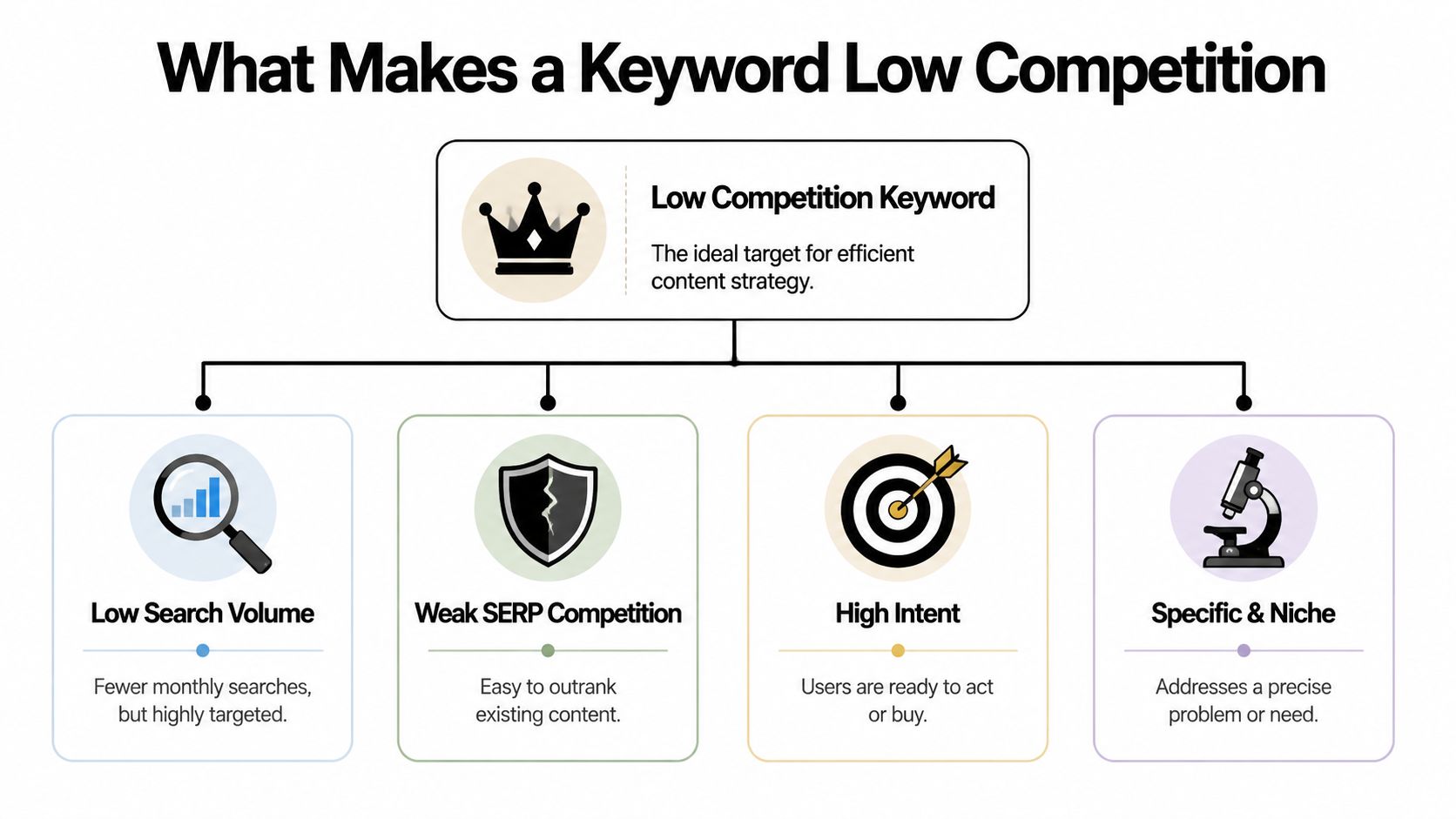
The highway versus backroad test
When I assess whether a keyword is low competition, I don't stop at a tool score. I look for four conditions working together.
- Lower difficulty. This is the obvious one. If the keyword sits in the easier range, it deserves attention.
- Specific wording. Narrow phrases usually mean a narrower SERP. That's good for smaller sites.
- Intent clarity. A keyword with obvious purpose is easier to satisfy with a focused page.
- Weaker existing results. If the top pages are thin, outdated, off-intent, or from forums and mixed directories, you have a shot.
A keyword can have modest volume and still be far more useful than a broad term because the visitor knows what they want. That's why long-tail and use-case-driven phrases often outperform the obvious targets for underdog sites.
Practical rule: If the current top results look generic, loosely matched, or half-finished, the keyword may be easier than the number suggests.
Keyword Difficulty thresholds that matter
KD isn't perfect, but it's useful when you treat it as a filter rather than a verdict.
| KD Score Range | Competition Level | What It Means for Your Business |
|---|---|---|
| 0-29 | Easy | Best hunting ground for newer sites, local businesses, and smaller brands |
| 30-39 | Low to moderate | Possible if intent is clear and the current SERP is weak |
| 40+ | Competitive | Usually not the first place an underdog should spend energy |
Many businesses struggle with this specific step. They use one number in isolation. But KD only tells part of the story. Search results can still be beatable if the ranking pages don't solve the query well.
Look for signs like these:
- Forum-heavy SERPs. Google may be struggling to find a strong page.
- Mismatched content types. Product pages ranking for informational searches, or blog posts ranking for commercial queries.
- Thin local pages. Common in service niches where competitors haven't invested in content.
- Weak topical depth. The top page answers the core question but leaves obvious follow-up questions untouched.
Low competition keywords aren't magic. They're just winnable. That's enough.
A Practical Workflow for Discovering Hidden Gem Keywords
Most businesses don't need more keyword ideas. They need a better way to separate useful ideas from junk.
Start manually. Tools help later. If you skip the manual step, you'll end up with a list that looks clean in a spreadsheet but has no connection to how customers search.

Start where customers already complain and compare
The best low competition keywords often show up in places where people describe their problem in plain language.
Search these sources with a notebook open:
Reddit threads
Product comparisons, frustration posts, niche subreddits, and "what should I use for…" questions are full of raw keyword phrasing.Quora and industry forums
Not because the answers are always good, but because the questions reveal recurring demand.Google autocomplete
Type a seed phrase and run the alphabet soup method. Add letters after the phrase and note what keeps appearing.People Also Ask
This is one of the fastest ways to map adjacent questions and supporting subtopics.Competitor navigation and page titles
If a competitor has a page for a narrow use case, that's often a sign the query has value.
Build a list from these sources first. Don't judge it too early. You're trying to capture language, not declare winners.
Then sort the list by theme. A local roofer might end up with clusters like emergency repair, insurance claims, leak diagnosis, and neighborhood-specific searches. A software company might see clusters around alternatives, integrations, pricing, and use-case pages.
Use tools to narrow the list, not to replace judgment
Once you have themes, move into a keyword tool and filter aggressively.
According to SEOptimer's overview of high-volume low-competition keywords, high-volume low-competition keywords are defined as terms with 1,000 or more monthly searches and low KD scores below 30, and sites targeting long-tails with 100 to 1,000 volume achieved 40% to 60% first-page ranking rates within 90 days, compared with 5% to 10% for high-KD terms in Ahrefs and Semrush data from 2020 to 2025.
That doesn't mean you should only chase the highest numbers inside the easy range. It means you should prioritize combinations that are still realistic.
Use filters like these:
- Minimum relevance first. If the term doesn't connect to what you sell, cut it.
- Low KD second. Keep the list focused on terms your site can plausibly win.
- Volume as a tiebreaker. Use it to prioritize among good options, not to override intent.
- SERP sanity check last. Open the results and look at what's ranking.
A practical shortlist usually includes three buckets:
| Bucket | What it looks like | Why it matters |
|---|---|---|
| Quick wins | Narrow problem-focused phrases | Easier to rank and useful for early traction |
| Commercial terms | Alternatives, reviews, best-for pages | Stronger buying intent |
| Authority builders | Closely related informational topics | Support internal links and topical coverage |
After you've built that shortlist, watch this walkthrough for another angle on researching easier terms:
One more thing matters here. Don't confuse weird with valuable. Some low competition keywords are easy because nobody searching them is likely to buy, call, or care. The point isn't to find obscure phrases. The point is to find overlooked phrases that map to real demand.
Validating Keywords for Profit Not Just Traffic
A keyword isn't good because it can bring visits. It's good if those visits can turn into business.
Many small sites waste months at this stage. They publish informational content that attracts curious readers, students, and people with no intention to buy. The analytics dashboard looks alive, but the pipeline doesn't move.
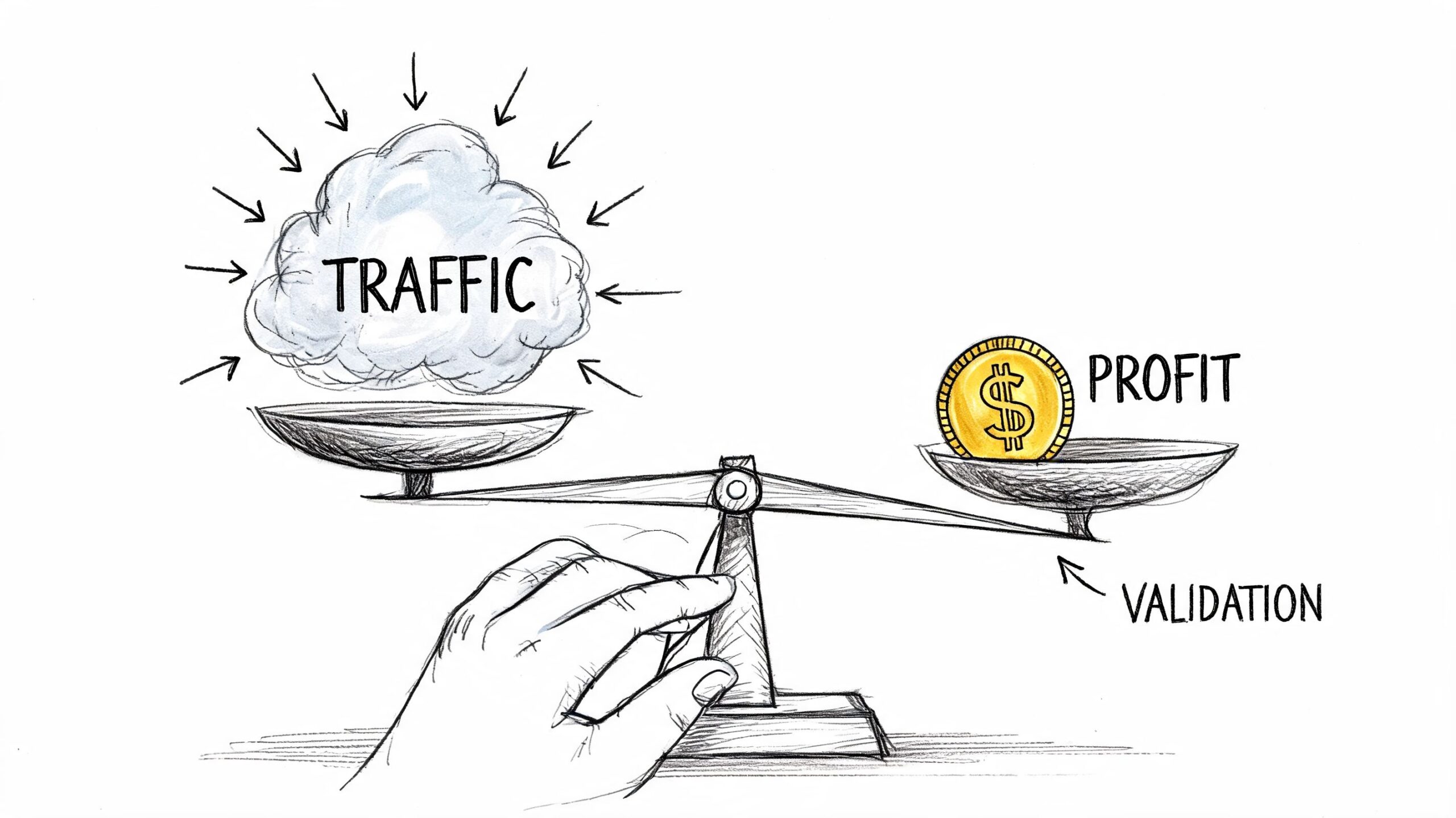
Traffic can distract you from revenue
Bottom-of-funnel keywords deserve more attention than they usually get, especially for lean businesses. According to this YouTube discussion on BOFU keyword opportunities, specific buyer-intent phrases such as "best zero-based budgeting app for freelancers" are often undertargeted and can rank in weeks rather than months compared with broader terms.
That's the kind of asymmetry underdogs should exploit.
Someone searching a broad educational query may only want a definition. Someone searching an alternative, review, best-for, or near-me phrase is much closer to taking action. Those keywords often have less competition precisely because they're narrow. Large publishers prefer scale. Small businesses need qualified demand.
If a keyword sounds like something a real buyer would type five minutes before making a decision, pay attention.
A simple intent checklist
Before adding any keyword to your calendar, run it through this screen:
Does the searcher want information, comparison, or action?
Action and comparison terms usually deserve priority if leads or sales matter now.Can your business satisfy the intent directly?
If the searcher wants a tool comparison and you sell one, great. If they want free templates and you only sell consulting, think harder.Would the ideal customer search it?
Not every relevant keyword is commercially useful. Relevance alone isn't enough.Can one page answer the query cleanly?
If the topic is too broad or mixes multiple intents, it may need a different angle.Is there a natural next step?
Strong pages make the conversion path obvious. Book a call. Request a quote. Start a trial. View pricing.
Here's a quick lens for judging intent:
| Intent type | Example pattern | Priority for a small business |
|---|---|---|
| Informational | how to, what is, why does | Useful when tightly connected to your offer |
| Commercial | best, review, alternative, comparison | Usually high priority |
| Transactional | buy, near me, pricing, quote | Highest priority when relevant |
| Navigational | brand names, login, support | Usually low priority unless it's your brand |
The hard truth is simple. A smaller business doesn't need the most traffic. It needs the right traffic first.
Content and Link Building for Low Competition Terms
Once you've chosen the keyword, don't overcomplicate the page.
Low competition keywords usually don't require a giant content production machine or an expensive backlink campaign. What they do require is a page that matches intent better than what's already ranking. That means relevance, clarity, structure, and a strong internal link network.
Build the page that should rank
For easier terms, content quality often wins before raw authority does. But quality in SEO doesn't mean "long." It means the page earns the click and then satisfies the search.
A page targeting a specific low competition keyword should usually do these things:
- Answer the main question early. Don't hide the value in paragraph eight.
- Match the content type already favored by the SERP. If searchers want a comparison page, don't force a generic blog post.
- Cover obvious follow-up questions. Use subheadings that reflect how buyers think.
- Show real specificity. Mention use cases, constraints, trade-offs, and who the option is best for.
- Link to supporting pages. Build clusters so the page isn't isolated.
A focused page with sharp intent usually beats a bloated page that tries to rank for everything.
Internal linking matters more than most small businesses realize. If you publish a page about "best accounting software for freelance designers," link to it from broader pages about freelancer accounting, tax workflows, invoicing, and software comparisons. That helps search engines understand the page belongs inside a real topical system, not as a random one-off article.
A simple cluster often includes:
- A commercial page targeting the main buyer-intent term
- Supporting informational pages that answer adjacent questions
- A broader category or hub page that links the topic together
Earn links you can actually get
You don't need a heroic outreach campaign for every low competition keyword. Many smaller sites stall because they think link building means sending hundreds of cold emails. Usually, they would be better off earning a handful of highly relevant mentions.
Realistic tactics include:
- Podcast guesting. Niche shows often link to your homepage or resource page.
- Expert commentary. Journalists, newsletters, and industry writers need usable quotes.
- Partnership pages. Suppliers, software integrations, and associations often maintain member or partner listings.
- Local relevance links. Chambers, sponsorships, neighborhood guides, and event pages can help local service sites.
- Original utility assets. A calculator, checklist, template, or comparison table gives people something to cite.
What doesn't work well for most underdogs is building links to pages that don't deserve them. If the content is vague, over-optimized, or written without first-hand usefulness, even a decent link won't save it.
The best sequence is simple. Pick a narrow keyword. Publish the page that answers it cleanly. Support it with nearby content. Then earn a few relevant links that make contextual sense.
How to Automate and Scale Your Keyword Strategy
The manual playbook is enough to get traction. It isn't enough to maintain consistency once the business gets busy.
That's where automation helps. Not as a shortcut for weak strategy, but as a way to apply a strong process repeatedly without rebuilding it from scratch every week.
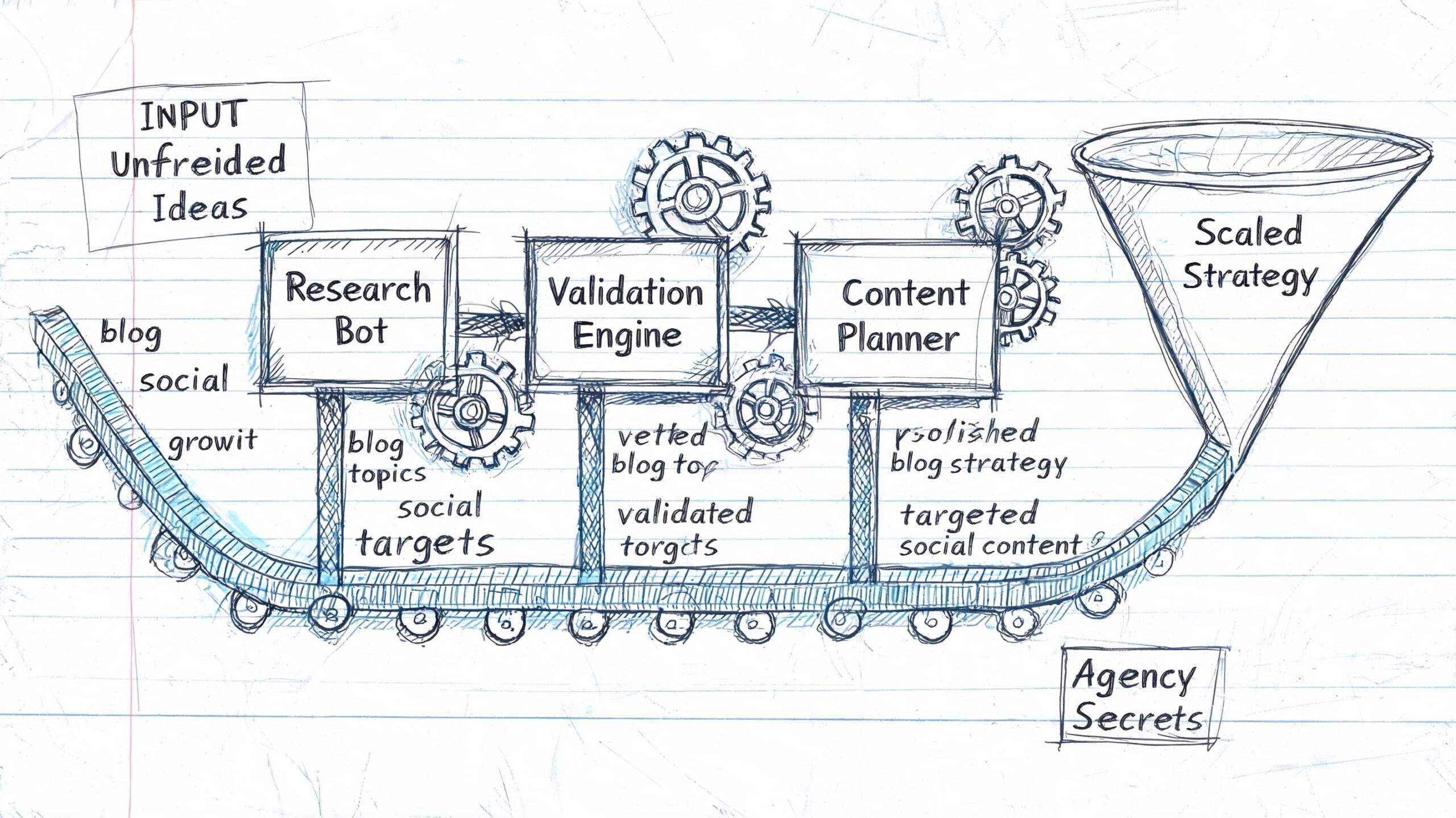
Good automation follows a clear process
If your workflow is fuzzy, automation just helps you make mistakes faster. But if your workflow is already sound, automation can remove the repetitive parts that slow teams down.
That usually means systematizing work like this:
- Keyword discovery based on low competition and clear intent
- Clustering related phrases into pages instead of creating cannibalized content
- Content briefs that reflect the actual SERP and intent
- Publishing cadence that doesn't collapse when the founder gets busy
- Internal linking across related pages and categories
Where AI actually helps
According to Seoprofy's discussion of low-competition keyword workflows, an emerging trend is using AI tools with precise prompts to find low-competition keyword clusters for low-DA sites, and tools that integrate People Also Ask and social data can automate discovery and publication of up to 30 articles per month while helping build authority 2x faster.
That matters because the biggest challenge for smaller teams usually isn't knowing one good keyword. It's turning one good keyword into a durable publishing system.
Used well, AI can help with:
- Expanding seed topics into clusters
- Finding long-tail variations that reflect real customer language
- Drafting faster around a validated outline
- Maintaining consistency across many supporting pages
Used badly, AI floods your site with generic content around weak keywords. That's worse than publishing slowly.
The winning setup is simple: humans decide the market, intent, offer, and trade-offs. Automation handles the repetition.
Agency Secrets gives small business owners a practical way to run this playbook without hiring an agency. It focuses on buyer-intent keyword research, consistent publication, relevant backlinks, and evergreen compounding, then pairs that strategy with OutRank to automate the heavy lifting. If you want an agency-free system for finding low competition keywords, publishing at scale, and growing organic traffic while you run the business, explore Agency Secrets.