Tag: link building

  • How Many Backlinks Should a Website Have? a 2026 Guide

    How Many Backlinks Should a Website Have? a 2026 Guide

    Most advice on backlinks gives you a number because numbers feel comforting. Get 50 links. Get 100 links. Hit some quota and rankings will follow.

    That's not how this works.

    If you're asking how many backlinks should a website have, the intent is right. You want a target. You want to know whether your site is weak, average, or competitive. But a universal number is usually the wrong answer, because backlinks only make sense in context. A local plumber, a niche Shopify store, and a finance publisher are playing completely different games.

    The better question is this: how many relevant referring domains do the pages already ranking for your target terms have, and what is the gap between them and you? Once you look at it that way, backlink planning stops being guesswork and starts becoming a practical SEO workflow.

    Table of Contents

    The Wrong Question With the Right Intent

    “How many backlinks do I need?” sounds precise, but it usually sends people toward the wrong plan.

    The intent behind the question is valid. A business owner wants to know what it will take to compete, how long it may take, and whether the budget makes sense. Those are the right concerns. The problem is that a universal backlink number does not answer them.

    Earlier benchmark data makes one point clear. A huge share of pages never attract links at all. That matters because many business owners assume they need a giant link profile before they can rank for anything. In practice, the useful question is narrower and more commercial: how many relevant referring domains does this page need to compete against the pages already ranking?

    That shift changes the work.

    Why the old question keeps misleading people

    A blanket number hides the only context that matters. Search results vary by query, page type, location, and market maturity. A local plumber targeting “water heater repair in Boise” is not playing the same game as a national SaaS company targeting “CRM software.”

    I see the same mistake over and over. Owners compare their site to a household-name brand, conclude they are hopelessly behind, then either give up or buy cheap links in bulk. Both choices come from starting with the wrong benchmark.

    A better approach is to treat backlinks like a competitive gap, not a quota.

    Practical rule: Stop asking for a universal number. Calculate the gap between your target page and the pages already winning the search results.

    What business owners usually get wrong

    The patterns are consistent:

    • They measure raw backlink totals instead of comparing page-level competitors. That inflates the target and leads to bad decisions.
    • They look at site-wide numbers when the ranking battle is usually happening on one URL. A strong domain helps, but the page still has to compete.
    • They copy the strongest outlier in the results. One dominant competitor can distort the picture and make the target look larger than it needs to be.
    • They buy links before checking whether content, intent match, and on-page SEO are already holding the page back. More links do not fix the wrong page.

    The straight answer is simple: a website should have enough relevant authority to close the gap with its real search competitors.

    Sometimes that number is lower than expected. Sometimes it is much higher. Either way, the right target comes from comparison, not folklore.

    Why Quality and Relevance Outrank Quantity

    Backlink counts are easy to obsess over because they give you a clean number. Rankings do not work that cleanly.

    Google weighs links by who is linking, why they are linking, and how closely that source fits the topic of the page. A single mention from a trusted industry site can move the needle more than dozens of low-value links built on irrelevant pages. I have seen small sites outrank larger competitors with fewer links because their referring domains were more relevant and better placed.
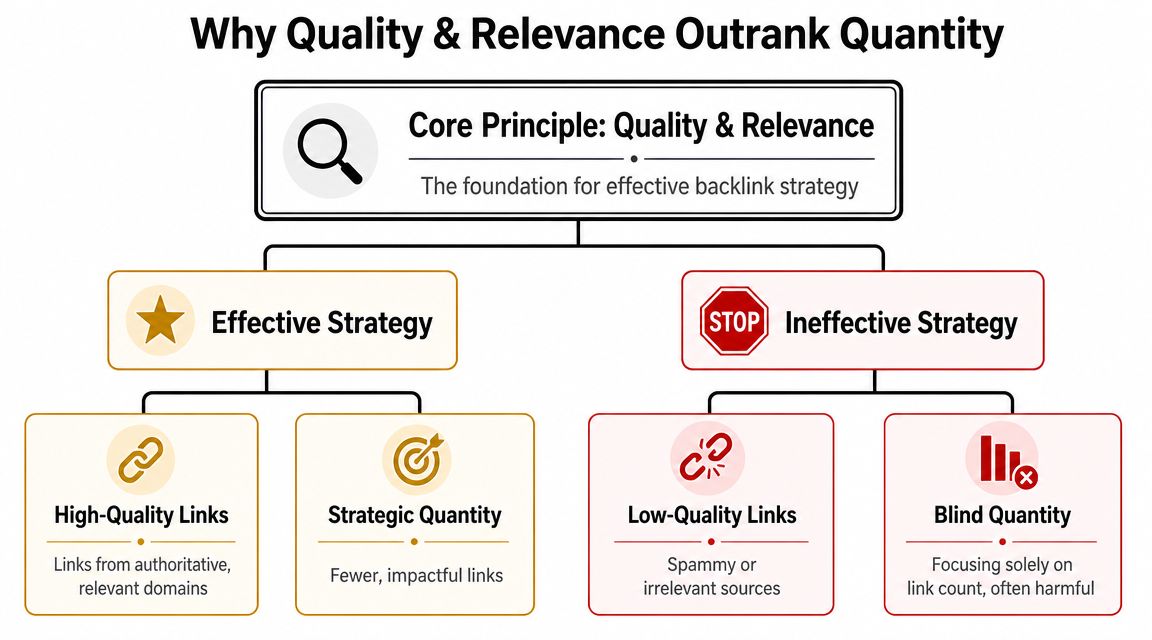
    An infographic illustrating why backlink quality and relevance are more important than quantity for SEO success.

    Count referring domains, not every stray link

    For planning and comparison, referring domains are usually the cleaner metric than total backlinks.

    The reason is simple. One website can link to you once in an article, then again in a sidebar, footer, author bio, and archive page. SEO tools may count all of that, but it is still one source making one broad endorsement. If you are trying to judge whether a page has enough authority to compete, unique relevant sites matter more than inflated link totals.

    That is also why bulk link packages look stronger in reports than they do in search results. They pad the count without adding many real signals of trust.

    Relevance changes the value of every link

    A link should make sense on the page where it appears.

    If you run a local accounting firm, a link from a regional business association, chamber of commerce, local paper, or tax resource is usually more useful than a random link from a lifestyle blog with no business audience. If you sell industrial equipment, a mention from a trade publication often beats ten links from general sites that happen to accept guest posts.

    This is the trade-off business owners need to understand. Relevant links are harder to earn, slower to get, and often less scalable. They are still the links that tend to hold value over time.

    Industry context changes the target

    The strength of the market still matters. Some search results are light on authoritative links. Others are crowded with established brands, publishers, and directories that have been earning links for years.

    That is why generic advice fails here. A local service business may only need a modest set of good, relevant referring domains to become competitive on its core pages. A national finance, legal, or software term can require far more authority, and links alone may not close that gap if the competing sites also have stronger content and broader topical depth.

    Here is the practical read:

    Market type What backlink reality usually looks like
    Local or niche business A smaller number of relevant local or industry links can be enough if the SERP is not dominated by major brands.
    Mid-competition commercial topic You usually need steady growth in page-level referring domains from credible, related sites.
    Aggressive national category Strong links are required, but they only work when paired with better content, stronger internal linking, and broader authority on the topic.

    What quality looks like

    High-quality links usually share a few traits:

    • Topical fit: The linking page serves an audience that overlaps with yours.
    • Editorial placement: The link is placed inside real content because it supports the point being made.
    • Page-level relevance: The specific page linking to you is related to the topic, not just the domain in general.
    • Traffic potential: A real visitor could click the link and find your page useful.
    • Credibility: The site is maintained, readable, and selective about what it publishes.

    Low-value links follow a different pattern. They come from thin sites built to sell placements, junk directories, irrelevant guest posts, sitewide footers, profile pages, and pages with no real audience. They can increase the number in a tool without improving your position in search.

    The useful question is not how many backlinks a website has in total. The useful question is whether your target page has enough relevant referring domains to compete with the pages already ranking. That is the standard that matters.

    How to Calculate Your Specific Backlink Target

    There is no useful universal backlink number. The practical answer is page-specific and SERP-specific.

    The right target comes from link gap analysis. Compare your page to the pages already ranking for the query you want, then calculate the gap in relevant page-level referring domains. That gives you a working target based on the market in front of you, not a quota pulled from a blog post.
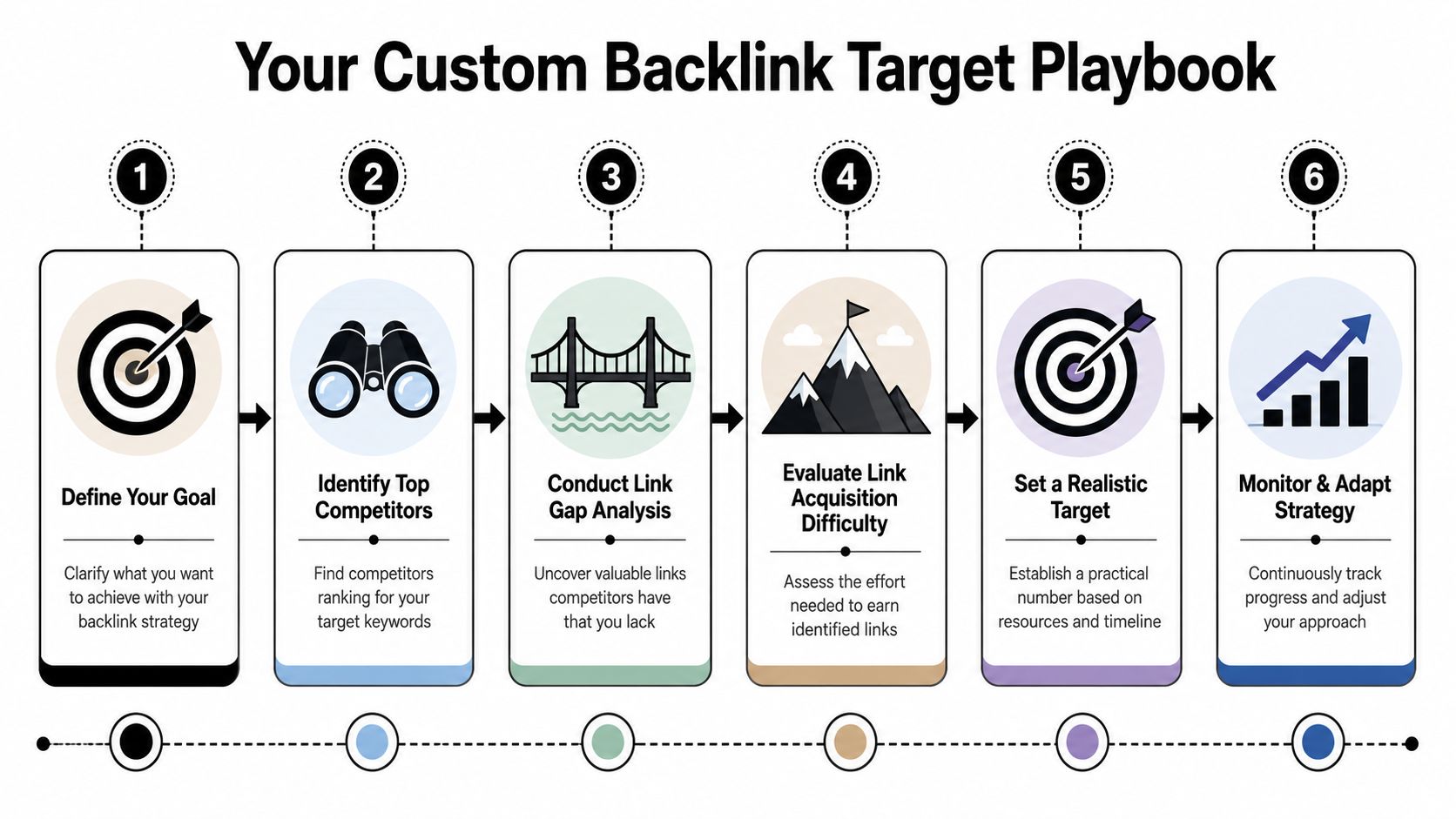
    A six-step diagram illustrating a custom backlink target playbook for effective SEO link building strategies.

    Start with the page, not the whole site

    As noted earlier, OutRank recommends treating backlink planning as a link gap exercise. The useful comparison is between your target page and the pages already winning the same search intent, with page-level referring domains as the main planning metric.

    That approach works because Google ranks pages, not abstract domain totals.

    Here's the workflow I use:

    1. Pick one target page. Choose a service page, category page, or article with clear search intent.
    2. Choose one keyword cluster. Group the closely related terms that page should rank for.
    3. Pull the live SERP. Use Ahrefs, Semrush, Moz, or a rank tracker that lets you inspect the pages ranking.
    4. Filter out bad comparisons. Ignore pages that rank for reasons you cannot realistically match, such as giant marketplaces, government sites, or major publishers with overpowering brand demand.
    5. Record page-level referring domains for relevant competitors. Focus on the pages competing on the same intent, not the entire domain profile.

    A local service page targeting “emergency dentist in Austin” should be benchmarked against other local intent pages. A national health publisher in the results may be interesting, but it usually should not define your target.

    Here's a quick explanation of the mindset in video form:

    Use the median, not the loudest competitor

    Business owners often make the same mistake here. They look at the strongest ranking page, see a huge link profile, and assume they need to match it link for link.

    That usually leads to bad budgeting and worse decisions.

    Use the middle of the competitive set. Look closely at the pages ranking in the range you want to reach, especially the ones just above you. Record their page-level referring domains, then find the median. That gives you a realistic benchmark instead of a fear-based one.

    A few judgment calls matter:

    • Check intent match first. If a page ranks because it answers a slightly different query type, do not use it as a benchmark.
    • Review link quality manually. If a page is propped up by irrelevant placements or obvious spam, do not treat those links as a model.
    • Watch for authority inflation. Some URLs rank because the domain is unusually strong. Your page may need better content support or stronger internal linking before more links make a difference.

    If the pages above you win on content depth, trust, and intent match, adding links to a weak page will not fix the ranking problem.

    Turn the gap into a working target

    Once you have the benchmark, convert it into a test plan.

    If your page sits meaningfully below the median for relevant referring domains, that difference is your initial gap. Do not turn that gap into a rigid promise like “we need 50 links.” Use it to set a first-round target you can test, then reassess after the page responds.

    That is the part many link building conversations miss. The goal is not to hit a round number. The goal is to close enough of the gap to see whether links are the limiting factor.

    A practical model looks like this:

    Step What to do
    Baseline Measure your page's current referring domains.
    Benchmark Compare against ranking pages that match your search intent.
    Gap Estimate how many relevant domains separate you from the median or better.
    Test batch Build a small round of strong links first.
    Recheck Watch rankings, impressions, clicks, and competitor movement before expanding.

    In practice, I prefer a measured first batch over an oversized campaign. Some pages move once the link gap narrows. Others stay flat because the underlying problem is weak content, poor internal linking, or a mismatch between the page and the query.

    That is how to answer the backlink question without guessing. Calculate the number page by page, based on the competitors that matter, then adjust after you see how the page responds.

    SEO tools can speed up the research, but they do not replace judgment. The method stays the same whether you use a spreadsheet or a premium platform. You are not chasing a vanity number. You are measuring the gap between your page and the pages already taking the traffic.

    Setting Realistic Link Building Timelines and KPIs

    Backlink building is rarely a quick fix. It behaves more like sales outreach or reputation building than a switch you flip.

    That's why impatient campaigns so often go sideways. A business owner disappears for months, panics when rankings stall, buys a burst of questionable links, then wonders why nothing meaningful improved. The problem isn't just the links. It's the stop-start behavior.

    A pencil sketch illustration featuring an hourglass with a growing plant, calendar, clock, and growth trend chart.

    Avoid feast or famine link building

    The safest pattern is usually steady, intentional acquisition tied to content worth promoting.

    For a small business, that often means setting a pace your team can sustain with quality. I'm not going to invent a universal monthly quota, because the right pace depends on your niche, budget, outreach ability, and how much content support you already have. What matters is consistency. A slow stream of relevant links built around real pages usually beats occasional bursts built around desperation.

    A few practical rules help:

    • Match effort to opportunity. Don't try to build links to thin pages, expired offers, or weak location pages.
    • Keep campaigns narrow. One strong service page and one strong guide are easier to support than ten average assets.
    • Expect uneven movement. Rankings may sit still, then shift once the page clears a trust threshold.
    • Treat outreach as pipeline work. Some links land quickly. Others take follow-up or arrive much later.

    Track outcomes, not just link totals

    The wrong KPI is “we got links.” That's activity, not business impact.

    Track the page the links point to and watch what changes around it:

    KPI Why it matters
    Target keyword movement Tells you whether the page is becoming more competitive for the terms that matter.
    Organic traffic to the target page Shows whether visibility is turning into visits.
    Referral traffic from earned links Confirms whether those placements have audience value, not just SEO value.
    Lead or sale quality from the page Keeps the campaign tied to business outcomes.

    Good link building should improve more than a dashboard metric. It should strengthen a page that has a real job on your site.

    The businesses that get the best results usually do one thing well. They stop treating backlinks as a separate trick and start treating them as support for revenue-driving pages.

    Actionable Tactics for Earning High-Quality Links

    Most small businesses don't need twenty link building tactics. They need a few that are realistic, repeatable, and aligned with the assets they can produce.

    The best tactics aren't the ones that sound clever in an SEO forum. They're the ones you can run consistently without torching your brand or wasting a month on junk placements.
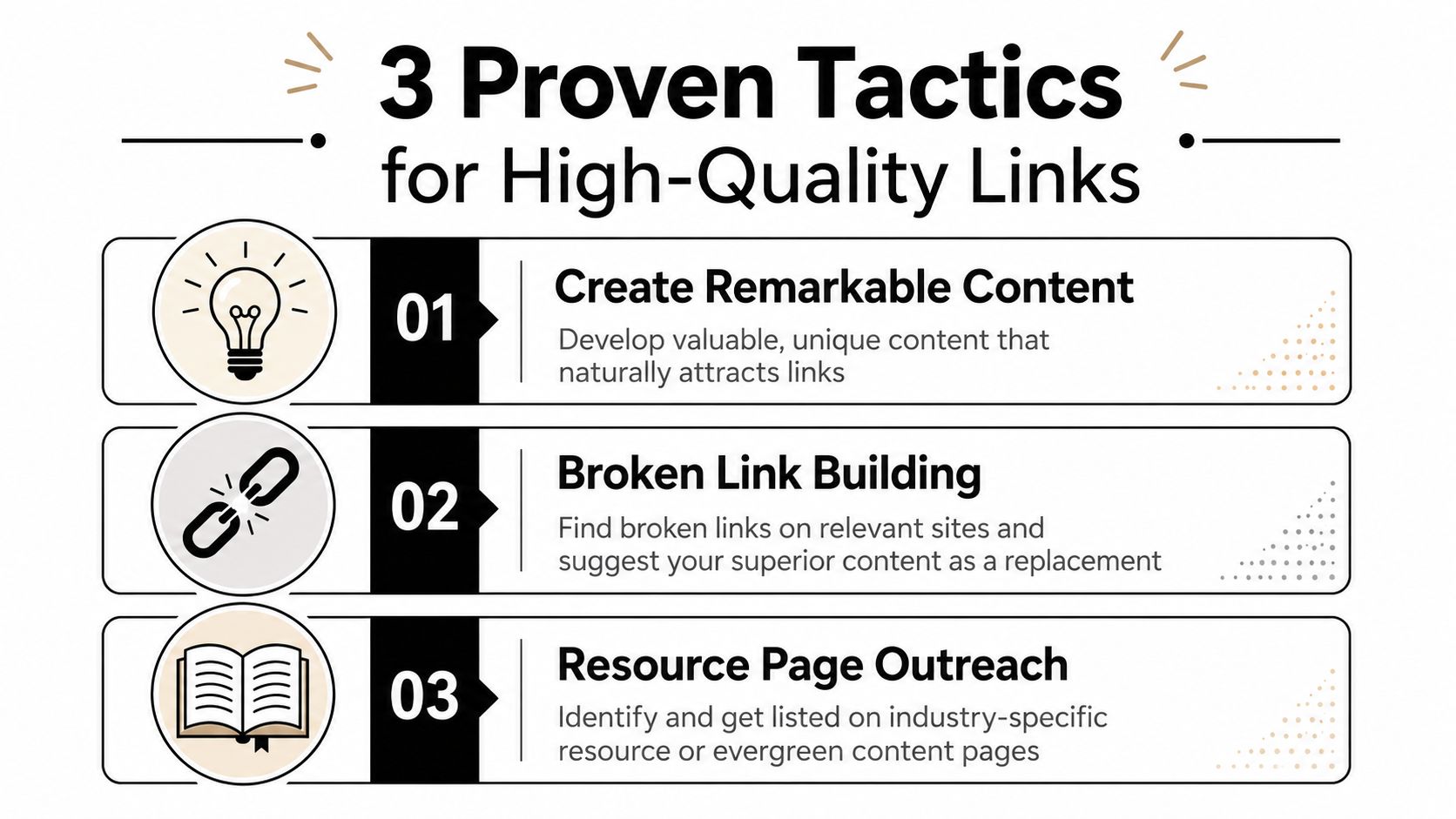
    An infographic illustrating three effective SEO strategies for acquiring high-quality backlinks to improve website authority.

    Guest posting that actually helps

    Guest posting still works when you treat it as audience access, not a link vending machine.

    A good guest post target has a real readership, a clear editorial standard, and overlap with the people you want to reach. If you sell bookkeeping services for freelancers, a freelancer publication or small business operations blog makes sense. A random lifestyle blog that accepts anything does not.

    A solid process looks like this:

    • Choose relevance first. Ignore flashy authority metrics if the audience fit is poor.
    • Pitch topics the host would publish anyway. Editors want useful articles, not disguised link inserts.
    • Link naturally to a supporting asset. A detailed guide, original framework, or useful resource works better than a hard sales page.
    • Keep the relationship alive. One strong publishing relationship can produce multiple opportunities over time.

    Digital PR for small businesses

    You don't need a huge brand to do digital PR. You need something cite-worthy.

    That could be a local trend roundup, an expert commentary angle, a practical industry guide, or a page built around a question journalists and bloggers already ask. The key is giving publishers a reason to reference you that goes beyond “please link to my website.”

    Here's what tends to work better than generic outreach:

    • Local expertise: Service businesses often have useful seasonal or regional insight.
    • Operator experience: Founders can comment on process, customer behavior, or common mistakes.
    • Original packaging: Even without proprietary data, a well-organized resource can earn citations if it's more useful than what already exists.

    Publish something another site would feel comfortable citing in its own content. That's the threshold.

    Resource page outreach

    Resource page links are underrated because they're not flashy.

    They work best when you already have a useful asset. Think checklists, glossaries, beginner guides, local guides, tools, or evergreen explainers. Then find websites that maintain “helpful resources,” “recommended tools,” or “further reading” pages in your niche.

    The outreach is simple when the fit is real. Brief note, clear reason, direct URL, no fluff.

    A few things make this easier:

    • Build the right asset first. Outreach can't rescue a weak page.
    • Qualify pages manually. If the resource page is abandoned or stuffed with junk, move on.
    • Explain the match clearly. Tell them why your page helps their readers specifically.
    • Update your own asset. Resource-worthy pages need maintenance.

    If I were advising a small business with limited time, I'd start with one linkable guide, a short guest posting list, and a focused batch of resource page outreach. That's often enough to build momentum without turning link building into a full-time job.

    Integrating Backlinks With Content and Topical Authority

    Backlinks are powerful, but they don't perform miracles.

    If the target page is thin, vague, outdated, or mismatched to search intent, better links may lift it a little but won't fix the core issue. Strong rankings usually come from a combination of useful content, clear topical alignment, sound internal linking, and a backlink profile that reinforces the page's credibility.

    Links amplify quality

    The best page to build links to is rarely your homepage by default. It's the page that deserves to rank and can convert the attention.

    That usually means a page with clear intent match, original value, and enough depth to satisfy the search. A service page should answer buyer questions plainly. A guide should teach. A category page should help people compare and choose. When those basics are in place, backlinks act like an amplifier.

    A simple content cluster helps too. If you want one main page to rank, surround it with related supporting content that addresses adjacent questions and subtopics. That gives search engines a stronger topical map of your site.

    Internal links make earned authority travel

    A backlink points to one URL. Internal links help distribute that value through the rest of the site.

    That's why smart site architecture matters. If your strongest guide has earned links but sits isolated from your money pages, you're wasting part of the benefit. Link from authority pages into relevant service pages, supporting guides, comparison pages, and key conversion paths where it makes sense for readers.

    Here's the bigger picture:

    • Build content people can cite. No link strategy saves forgettable pages.
    • Earn links to pages with strategic value. Not every page deserves promotion.
    • Use internal links intentionally. Help authority flow to related pages.
    • Stay within your topic lane. Topical consistency makes every earned link work harder.

    If you've been asking how many backlinks should a website have, the honest answer is still “it depends.” But now you have the version that's useful. Calculate the gap, build the right links, support the right pages, and judge success by rankings and revenue, not by a vanity number.


    Agency Secrets helps small business owners turn this kind of SEO work into a repeatable system instead of a guessing game. If you want practical help with keyword targeting, content production, backlink strategy, and competitor analysis without hiring an agency, take a look at Agency Secrets.
  • Get High Authority Backlinks: 2026 Guide

    Get High Authority Backlinks: 2026 Guide

    Most backlink advice is backward. It tells small businesses to chase volume, buy placements, or obsess over DA screenshots. That approach burns money and usually builds a backlink profile full of links nobody reads, nobody trusts, and Google can safely ignore.

    A better approach is smaller, sharper, and much more realistic if you're running the business yourself. You don't need hundreds of links. You need the right links from relevant sites, useful pages, and real editorial contexts. That's how a solo operator can compete with bigger brands that waste budget on bloated SEO campaigns.

    The practical way to get high authority backlinks is to treat link building like business development. Find the right targets. Create one or two assets worth citing. Reach out with a useful reason. Vet every opportunity. Then track whether those links improve rankings, traffic, and leads. That workflow is slower than buying junk links, but it holds up.

    Table of Contents

    What Actually Counts as a High Authority Backlink

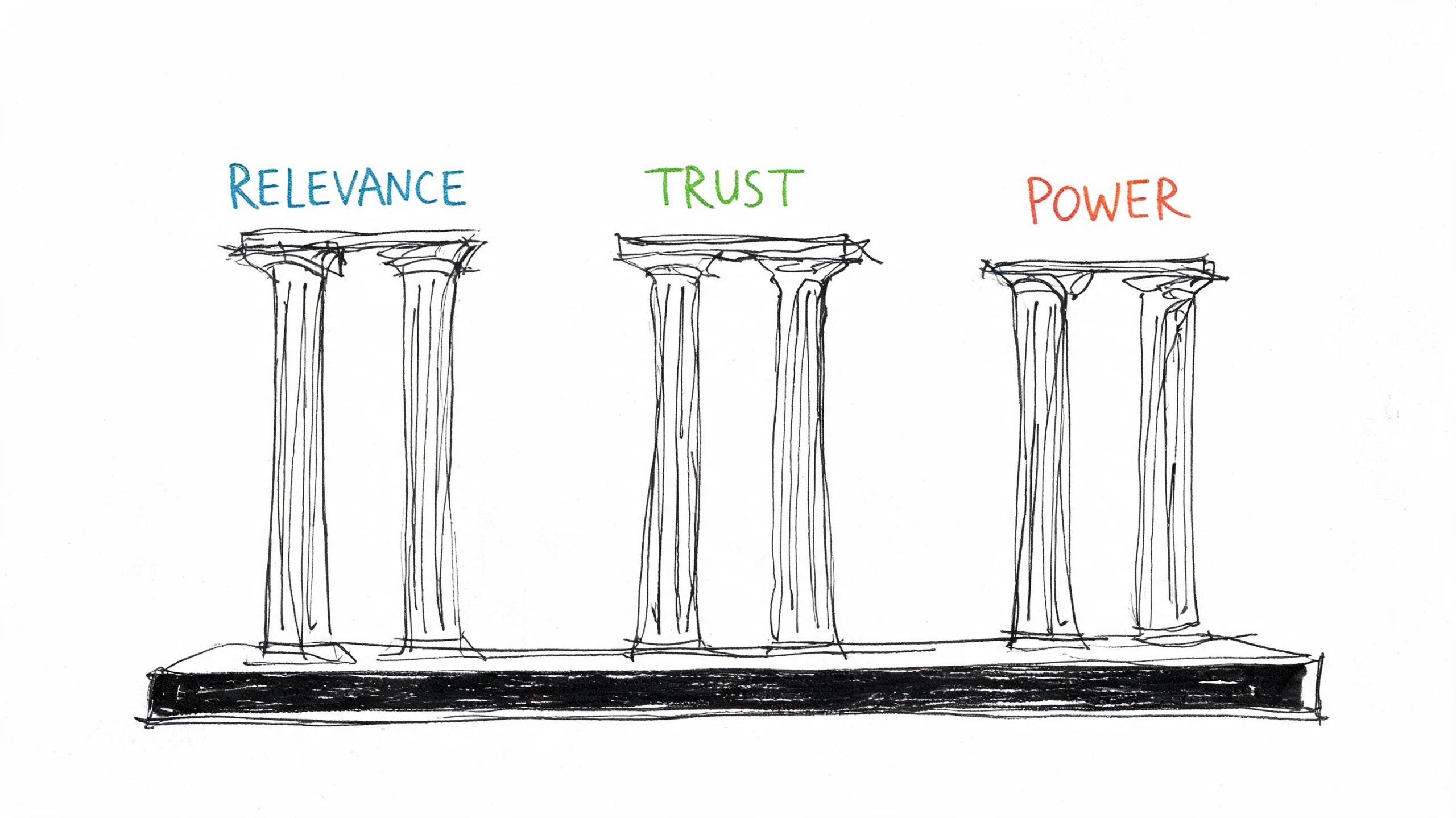
    High authority is not a vanity score. It is a link from a site that people in your market trust, placed on a page that makes editorial sense, and strong enough to pass real visibility and credibility to your business.

    A hand-drawn sketch of three architectural pillars labeled Relevance, Trust, and Power on a dark base.

    Authority starts with relevance

    A local clinic will usually get more SEO value from a respected healthcare publication than from a high-DR marketing blog. An industrial supplier will usually benefit more from a trade journal than from a broad business site with no subject overlap. Search engines do not treat every strong domain as equally meaningful. Context changes the value of the link.

    Metrics still help with screening. They just should not make the decision for you. A useful benchmark is this: high-authority backlinks from sites with DA above 60 to 70 are foundational for SEO, and a single DA 75+ link can equal the value of 5 to 10 links from DA 30 sites, according to Rock The Rankings on high-authority backlinks.

    For a solo business owner, the practical definition is simpler than the SEO industry makes it sound:

    • Relevant: The site covers your niche, your customer problem, or a close adjacent topic.
    • Trusted: The site has real authors, real readers, and content that exists for more than selling links.
    • Powerful: The link sits inside the main content of a page that already earns attention and trust.

    That is the filter.

    If a link would send you qualified referral traffic, strengthen your reputation, or help a prospect trust you faster, it is probably worth pursuing. If it only looks good inside a spreadsheet, skip it.

    Trust and placement matter more than raw domain metrics

    A DA 70 link in a weak article can be mediocre. A DA 45 link from the right industry site can be excellent. I see small businesses waste money when they buy based on domain score alone and ignore the page, the topic, the anchor text, and the company the link keeps.

    Ask basic questions. Is the article indexed? Does the site publish on one topic or dozens of unrelated ones? Do the outbound links look editorial, or do they look rented? Would you be comfortable showing that placement to a customer who is doing due diligence on your business?

    That standard keeps you out of trouble and saves budget.

    For small businesses, the goal is not to build the biggest backlink profile in the category. The goal is to earn a compact set of links that make your business look like a credible choice in a narrow market. One mention from a trade association, local news site, software partner, or respected niche publisher can do more than twenty low-trust links that never should have been built.

    Finding Link Opportunities Worth Your Time

    The bottleneck in link building is rarely outreach. It is picking targets that were never realistic in the first place. A solo business owner does not need a list of 500 sites. You need 20 to 30 prospects with a clear reason to care about your business, your expertise, or an asset you can produce without hiring an agency.

    A house connected by a dotted line to a magnifying glass revealing a glowing yellow chain link.

    Start with competitor patterns, not raw backlink exports

    Ahrefs and Semrush are useful here, but the goal is not to download every referring domain and copy it. The goal is to identify repeatable link types you can earn with limited time.

    Pull two or three direct competitors. Then sort their links into buckets:

    1. Resource page links from curated tools, guides, and recommended vendor pages.
    2. Contributed content links from industry blogs, podcasts, and expert roundup posts.
    3. Partner links from software vendors, distributors, associations, or complementary service providers.
    4. Editorial citations where a journalist, publisher, or blogger quoted them or referenced a useful asset.

    Then ask one practical question for each link. What caused it?

    Sometimes the answer is a decent template. Sometimes it is a founder quote, a local data point, a case study, or a niche page that solved a specific problem better than the generic results already ranking. That cause matters more than the backlink itself, because it tells you what to build and who to pitch.

    Small operators can beat bigger brands in this area. Large companies often win on volume. You can win on fit.

    Build a short list you can qualify by hand

    A prospect is worth your time if you can answer three questions quickly:

    • Is the site relevant to your market?
    • Is there an obvious page or format where your business belongs?
    • Can you explain the value of your inclusion in one or two sentences?

    If any answer is fuzzy, skip it.

    I would rather see a local accountant work a list of 15 association pages, local business publications, software partner directories, and niche finance blogs than spend a week emailing national publications that will never reply. Relevance and accessibility usually beat prestige when time is tight.

    Resource pages and niche lists still produce wins

    Resource pages get dismissed because so many bad ones exist. The good ones still work. They are maintained, selective, and built to help a specific audience find credible options.

    Search like a customer or editor would search. Use queries tied to your niche plus phrases such as "recommended tools," "helpful resources," "best vendors," "member directory," or "industry association." Then review the page manually.

    A strong resource-page opportunity usually checks these boxes:

    • The page serves readers first.
    • Your page or business fills a real gap in the list.
    • The site is active enough that someone may still review suggestions.

    Keep the outreach tight. Mention the exact page. Explain what your resource adds. Make it easy for the editor to say yes or ignore you without reading a long pitch.

    Weak fit kills response rates faster than weak copy.

    Use journalist requests as an ongoing channel

    HARO-style outreach is one of the few channels where a solo business owner can get strong editorial links without paying for placement, but it only works if you treat it like a routine. Analysts at Digital Applied's link building strategies found that using HARO can deliver DR 50+ editorial links with a 15 to 25% selection rate for optimized responses. The same analysis found that replying in under 2 hours improved selection odds, and that a brief daily habit can produce links from sites with strong authority signals.

    The trade-off is consistency. You may send many useful replies before one lands. That is still a good exchange if the process only takes 20 to 30 focused minutes a day.

    Use a simple workflow:

    • Choose narrow categories. Only respond where you have direct experience.
    • Reply fast. Journalists often use the first credible answers they receive.
    • Lead with the quote. Put the usable insight in the first lines.
    • Write like an operator. Specific examples beat polished marketing language.
    • Keep your byline clean. Name, role, company, website.

    If you run a local service business, a small ecommerce brand, or a specialized consultancy, you already have material worth quoting. Client patterns, pricing shifts, operational mistakes, buyer objections, and regional trends are all usable if you explain them plainly.

    That is the agency-free advantage. You are closer to the work, so your answers can be more specific, faster, and more useful than generic PR copy.

    Creating Content That Naturally Earns Links

    A lot of business owners spend too much time chasing links and too little time building pages that deserve them. If the asset is weak, outreach turns into begging. If the asset is useful, outreach becomes simple distribution.

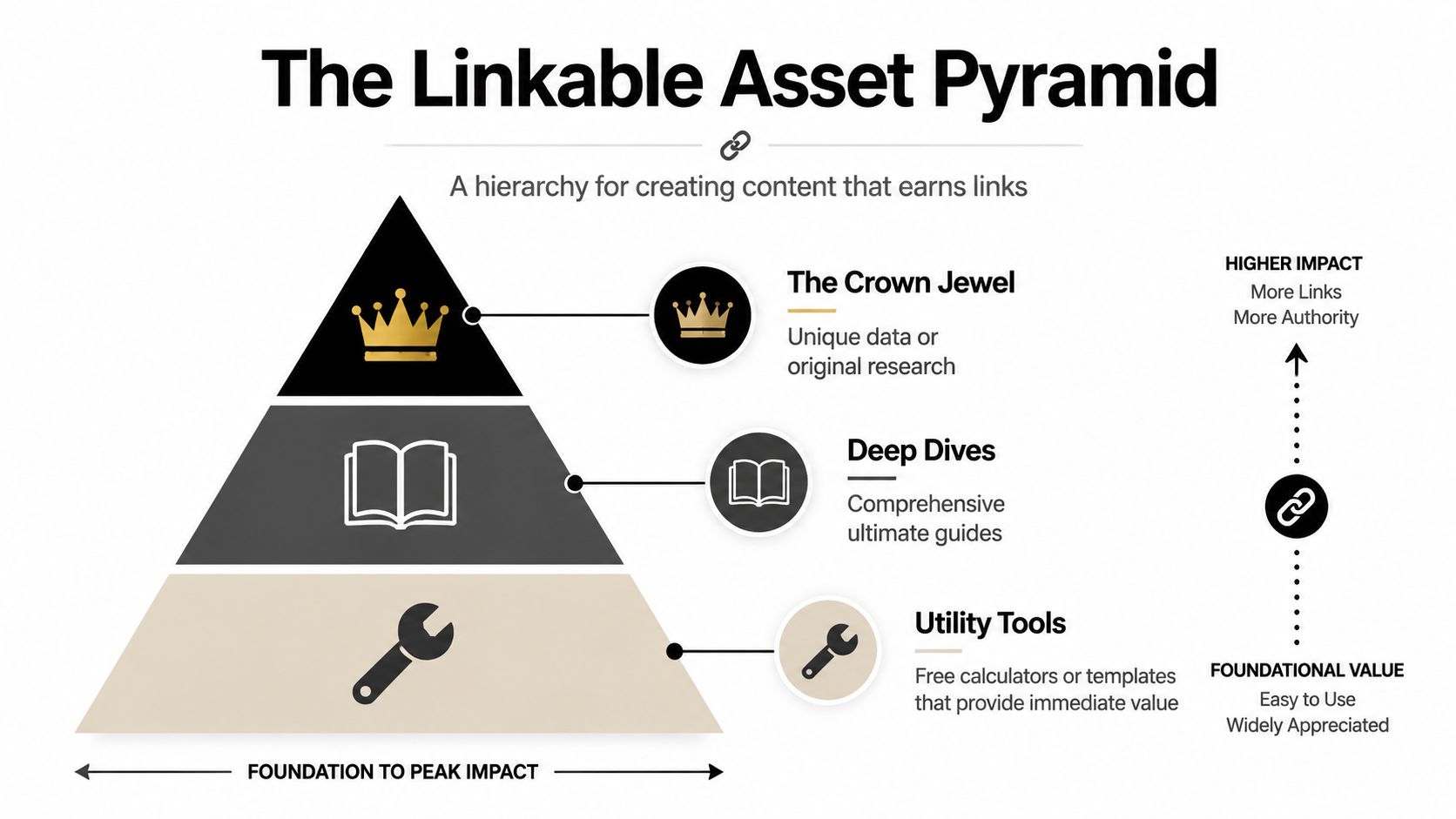
    A hierarchical pyramid diagram illustrating the different types of content assets that earn high authority backlinks.

    For a solo operator, the goal is not to publish more. The goal is to publish a small set of pages that other sites can cite without hesitation. Good linkable assets usually do one of three jobs. They explain something clearly, help someone complete a task, or add evidence from real-world experience.

    The three asset types worth building first

    I would start with one asset in each of these categories, then improve them over time instead of constantly creating new posts.

    Utility tools are the fastest win. Calculators, checklists, templates, intake forms, scripts, and worksheets earn links because they save people time. A local accountant can publish a quarterly tax checklist. A wedding photographer can publish a shot-list template. A B2B consultant can publish a vendor evaluation worksheet. None of these require a design team.

    In-depth guides work when the topic has search demand and weak existing resources. The page needs clear structure, plain-English explanations, examples, and a point of view shaped by actual client work. Publishing a longer article alone is not enough. It has to be the page another writer trusts as a reference.

    Original insight pages have the highest ceiling. That does not require a formal study. You can publish a pricing breakdown, a benchmark page, a summary of patterns from sales calls, or a list of recurring mistakes you see in projects. If the insight comes from doing the work, it can earn citations.

    Why some pages get cited and others get ignored

    Writers, editors, and site owners link for a practical reason. They are usually looking for one of four things:

    • Definition support: a page that explains a term without fluff
    • Evidence support: a source that strengthens a claim
    • Utility support: a tool, template, or checklist readers can use
    • Comparison support: a page that helps readers evaluate options

    That is why format matters.

    A 600-word opinion post rarely earns links unless the author already has a strong audience. A useful calculator can earn links with almost no promotion. A comparison page can attract citations from buyers, bloggers, and service pages if it stays current. A well-structured guide can become the source other writers reference when they need to explain a concept quickly.

    That is the agency-free advantage here. You do not need a content calendar packed with twenty article ideas. You need a few assets that are easier to cite than the alternatives.

    A practical content mix for small businesses looks like this:

    Asset type Best use Why it earns links
    Concept guide Explain a core topic in your niche Writers need a clear reference
    Template or checklist Help people take action fast Useful resources get cited
    Comparison page Clarify differences between options Supports buyer research
    Original observations Add perspective from real work Builds credibility and quotable material

    One warning. Do not start with an infographic, a glossy trend piece, or a broad “ultimate guide” unless you already know people in your field want that format. In small-budget link building, practical beats impressive.

    The best linkable assets reduce friction for another writer. They explain, prove, or simplify something that writer needs.

    A simple workflow works better than chasing content trends:

    1. List repeated questions. Pull them from sales calls, emails, and customer objections.
    2. Match each question to an asset type. Explanation, tool, comparison, or insight.
    3. Build the easiest high-value version first. A checklist often beats a large article.
    4. Add proof from real work. Screenshots, examples, numbers from your process, or common scenarios.
    5. Update the page quarterly. Freshness matters more on comparison and data-driven assets.

    If time is tight, start with the page another site can cite in one sentence and their reader can use in five minutes.

    The Art of Effective Outreach Without Being Spammy

    Cold outreach is overrated. Page-specific outreach is what gets links.

    A hand holding an envelope with a network node diagram rising from it, symbolizing digital communication and connectivity.

    A solo business owner does not need to send 500 emails a month. You need 20 to 30 well-chosen prospects, a real reason to contact each one, and a page worth linking to. That is how you compete with bigger teams without burning time on inbox churn.

    Editors and site owners ignore outreach for one simple reason. The email creates work instead of removing it. If your message asks them to review a random article, trust your claims, and decide where it fits, you are giving them another task. Good outreach does the opposite. It points to a specific page, a specific gap, and a specific fix.

    Start with a reason tied to the page

    The strongest outreach angle usually falls into one of four buckets:

    • A broken outgoing link on their page
    • An outdated recommendation or stat
    • A missing resource their readers would use
    • A section where your example, quote, or tool improves the article

    That is why the Skyscraper Technique can still work. Executed with precision, it can yield a 20 to 40% response rate. But 70% of campaigns fail because the pitches are generic. Showing a side-by-side comparison of value can boost replies by 35% or more, according to Search Logistics on link building statistics.

    The useful lesson is not "copy this tactic." It is simpler than that. Show why your page helps their reader more than what is there now.

    Before you email anyone, write down your reason in one sentence. If you cannot explain the fit that clearly, skip the prospect.

    Write like a person who noticed something useful

    Short emails work because they respect attention, not because they are clever. Keep the note specific, easy to scan, and low pressure. I tell clients to remove anything that sounds like a compliment written for ten other websites.

    Use these as starting points, then customize them.

    Broken link replacement

    Subject: Broken link on your [topic] page

    Hi [Name],

    I was reading your page on [topic] and noticed one resource in the [section name] appears to be broken.

    If you're updating it, I have a current guide on [topic] addressing the same angle here: [Your Page]

    If it's useful, feel free to swap it in. Either way, I thought you'd want to know about the broken link.

    Best,
    [Your Name]

    Resource page suggestion

    Subject: Possible addition to your [page title]

    Hi [Name],

    I found your resource page for [audience/topic] and saw you list tools and guides for [specific use case].

    We published a [guide/template/tool] on [topic] that could fit the [relevant section] because it helps readers [specific value].

    If helpful, I can send the direct link and a one-line summary for quick review.

    Thanks,
    [Your Name]

    Two small details improve reply rates. Use the recipient's page title or section name so they know you looked. Then make the ask easy to evaluate in under 30 seconds.

    One more thing helps. Study examples before you start sending emails.

    Follow up without becoming a nuisance

    A lot of good pitches get missed the first time. Inbox timing is messy. People save things and forget them. That is normal.

    The fix is a short follow-up sequence, not a bigger sales routine.

    • First email: State the page, the issue or opportunity, and your suggested resource.
    • Second email: Send a brief follow-up a few days later. Mention the same page and keep it to one or two sentences.
    • Third email: Close the loop. Give them an easy out and stop there.

    A clean follow-up looks like this:

    Just checking in on this resource suggestion for your [page/topic] page. If it's not a fit, no problem at all.

    That works because it sounds like a professional note, not a campaign trying to squeeze one more reply out of a list.

    The agency-free way to handle outreach is boring on purpose. Build a short prospect list. Match each site to one useful asset. Send personalized emails. Track replies in a simple spreadsheet. Keep the angles that get traction, and drop the ones that waste your week.

    Your Link Vetting Checklist To Avoid Penalties

    A decent outreach campaign can still create problems if you say yes to the wrong sites. Many business owners are harmed at this stage. They finally get traction, then accept links from sites that exist mainly to sell links.

    A good link prospect passes a common-sense test

    Don't overcomplicate vetting. Open the site and ask basic questions. Does it look like a publication someone reads? Are there named authors? Are the articles coherent? Do outbound links feel selective, or does every post push to unrelated businesses?

    Then use your tools. Ahrefs, Semrush, and even a manual Google search can tell you a lot. You're looking for topical consistency, signs of organic visibility, and pages that appear to serve users first.

    The strongest prospects usually share these traits:

    • Editorial clarity: Articles have a purpose, not just filler paragraphs around a link.
    • Relevant topic coverage: The site regularly publishes in your niche or a close adjacent one.
    • Reasonable outbound linking: It doesn't spray links to casinos, crypto schemes, payday loans, or unrelated software in every post.
    • Healthy publishing pattern: New content appears, old content still exists, and the site doesn't look abandoned.

    If a site looks like it was built for link sellers, treat it that way.

    Link Vetting Checklist

    Check What to Look For (Green Flag) What to Avoid (Red Flag)
    Relevance The site covers your industry or a tightly related topic The site publishes on every topic under the sun
    Editorial quality Named authors, readable articles, clear standards Thin content, anonymous posts, obvious AI slop
    Link placement Link appears naturally in the article body Footer, sidebar, author bio, or forced paragraph insertion
    Outbound profile Selective links to credible businesses and sources Frequent links to spammy or unrelated industries
    Site health Consistent publishing and signs of real readership Abandoned blog, broken pages, erratic updates
    Intent The placement makes sense for readers The page exists mainly to host outbound links

    Red flags that should end the conversation

    Some prospects don't deserve a second thought. Walk away if you see patterns like these:

    • Topic mismatch: A site about fashion wants to link to your B2B accounting page.
    • Paid-placement language: The editor immediately offers "dofollow packages" across multiple sites.
    • Recycled guest posts: Every article follows the same template with different anchor text.
    • Sketchy neighbors: The site links to industries you wouldn't want your brand near.
    • No real standards: The publisher accepts anything as long as someone pays.

    The safest mindset is simple. If you'd be embarrassed to show the site to a customer, don't want the link.

    Measuring ROI and Scaling Your Link Building

    A link is only valuable if it improves a page that matters to the business.

    Small business owners get into trouble when they measure link building by volume. Ten new links can look productive in a report and still do nothing for rankings, leads, or sales. The better approach is simpler. Tie every link effort to a page with a job to do, then check whether that page gained more visibility, better traffic, or more conversions over time.

    Track the signals that connect to revenue

    Start with four numbers:

    • Referring domains to your money pages
    • Ranking movement for the linked page
    • Referral traffic from the linking site
    • Leads or sales assisted by organic visits to that page

    That gives you a practical scorecard without turning this into a data project.

    Google Search Console shows whether impressions and clicks are rising. Google Analytics shows whether the page attracts useful visits and assists conversions. Your SEO tool helps you confirm whether the page is gaining stronger referring domains over time. For a solo operator, that is enough to spot whether the work is paying off.

    Patience still matters. Link building usually pays back over months, not days. A strong placement on the right site can support rankings long after the outreach work is done, especially if it points to a commercial page or a linkable asset that feeds internal authority to revenue pages.

    Review links at the page level, not just the domain level

    This is the part many small businesses skip.

    Do not ask, "Did link building work?" Ask, "Did links to page A improve page A's performance enough to justify the time spent getting them?" That question is much easier to answer, and it helps you stop wasting effort on pages that were never likely to produce business value.

    A simple monthly review works well:

    • Pick the 5 to 10 pages you actively built links to
    • Compare current rankings against the previous month
    • Check organic clicks and assisted conversions
    • Note any new referring domains to each page
    • Flag pages that improved, stalled, or declined

    After two or three cycles, patterns show up. Some pages respond quickly to a few strong links. Others need better on-page work, stronger search intent alignment, or a better offer before more links will help.

    Scale the parts that do not require your judgment

    A solo business owner should keep control of the work that affects quality. That means choosing targets, deciding the angle, writing or editing the outreach that needs a human touch, and building real publisher relationships.

    The repeatable tasks can be systemized:

    • prospect collection
    • contact research
    • content briefs
    • asset updates
    • reporting
    • internal linking support

    I usually advise owners to build one repeatable link workflow before trying to expand. For example, if resource page outreach is producing decent links at a reasonable time cost, keep that engine running before adding digital PR, guest posts, and broken link campaigns on top of it. One process executed consistently beats four half-finished tactics.

    Scaling link building without an agency usually means getting more selective, not doing more. Cut low-response prospect lists. Reuse winning outreach angles. Update the assets that already attracted links instead of constantly publishing from scratch. Protect your time for the small set of actions that earn placements.

    Frequently Asked Questions About High Authority Links

    Are high authority backlinks always expensive

    No. The expensive route is usually the shortcut route, paid placements on sites that exist to sell links. A solo business owner does better by earning links through useful assets, partner mentions, resource pages, journalist requests, and broken link outreach. The cash cost can stay low. The actual cost is time, follow-up, and choosing opportunities carefully.

    Should you care about DA and DR

    Use DA and DR to filter prospects fast, then move on.

    They are screening metrics, not decision-makers. A relevant link from a well-run niche site often does more for rankings and qualified traffic than a higher-metric link from an off-topic site with weak editorial standards. Check the site, the page, and the context of the link before you spend an hour on outreach.

    How long does link building take

    Longer than most owners expect.

    High-quality links usually come from repeated outreach, better assets, and steady relationship-building, not one clever email. That is why solo operators need a process, not a pile of tactics. Pick a page worth promoting, build a short list of strong prospects, send useful outreach, track what earns replies, and keep improving the asset. Done right, link building compounds, but it rarely pays off in a week.

    Should you buy backlinks

    I would not build a small business SEO strategy around bought links. The risk is not just Google penalties. It is wasting money on links that never move rankings, never send traffic, and sit on sites with no real audience.

    If you have budget, put it into assets people want to reference, cleaner outreach, and better prospect research. That gives you something you can keep using next month instead of starting over.

    What's the best first step if you're doing this alone

    Start with one page.

    Choose the page that already has business value, a service page, a strong guide, or a useful local resource. Improve it until another site has a real reason to cite it. Then build a short target list using competitor backlinks, relevant resource pages, and media request platforms. One page with a clear angle and focused outreach beats ten pages with weak positioning.

    If you want a practical, agency-free SEO system instead of random tactics, Agency Secrets is a smart place to start. It shows small business owners how to combine keyword research, content production, high authority backlinks, and evergreen SEO into one workflow, with OutRank handling much of the heavy lifting so you can stay focused on the parts that need your judgment.

  • 8 Powerful Example of Backlinks You Can Earn in 2026

    8 Powerful Example of Backlinks You Can Earn in 2026

    What does a strong backlink example look like when you are the one who has to earn it?

    Business owners usually do not need another generic list of link types. They need to know which links can improve rankings, which ones can send qualified referral traffic, and which ones are a waste of outreach time. A guest post on the wrong site, a bloated directory profile, or a paid placement dressed up as editorial coverage can all look fine in a report while doing very little for the business.

    The useful question is not whether a backlink exists. The useful question is whether the link is relevant, credible, and realistic for your site to earn again.

    This guide approaches backlinks like a working playbook, not a glossary. Each example shows what the link looks like, how to judge its quality signals before you pitch, and how to repeat the process without hiring an agency. That includes the trade-offs. Some link types take longer but hold value well over time. Others are faster to pursue, but only if you filter hard and avoid low-trust sites.

    The goal is to build a backlink profile that supports rankings, trust, and real business visibility. Random links rarely do that. Relevant, defensible links often do.

    Table of Contents

    1. Editorial Backlinks from Industry Publications

    Why do some backlinks move rankings and referral traffic, while others sit in your report and do nothing?

    Editorial backlinks usually sit in the first group. A trade publication, industry blog, or established news site links to your business because your insight makes their article better. That editorial judgment is what gives the link weight.

    What this backlink looks like

    A retail software company gets quoted in a piece about point-of-sale trends. A roofing contractor is cited in an article about storm-season maintenance. The link appears inside the body of the article, next to a claim, example, or expert quote the reader can use.

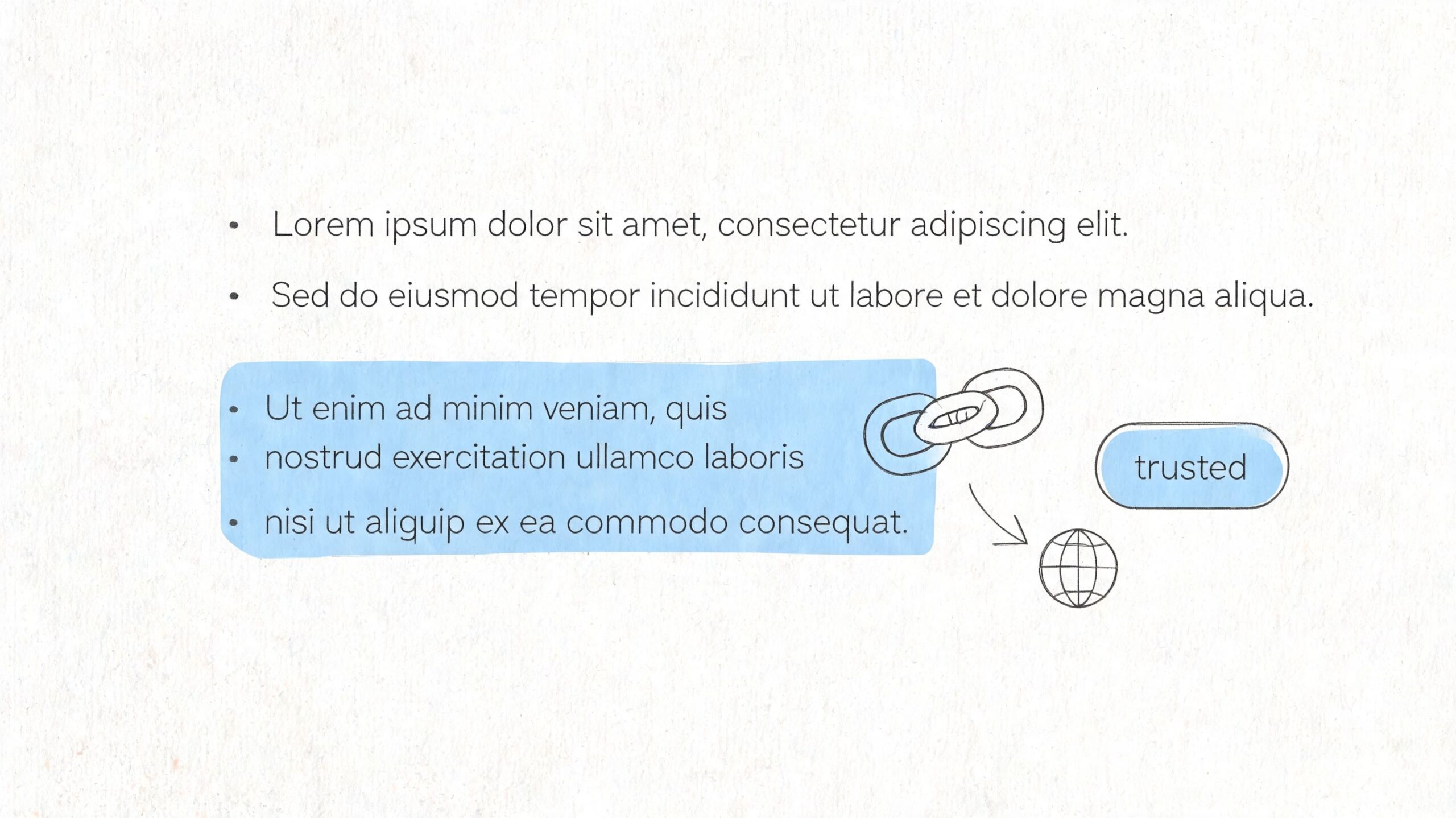
    A conceptual illustration showing a blue highlight box with text connected to a trusted globe icon.

    That context matters. A link from a respected publication is hard to manufacture because an editor has to decide your contribution deserves space. In practice, these links tend to send stronger quality signals than links you place yourself.

    How to earn it without a PR agency

    Business owners usually miss editorial links for one reason. They pitch the company instead of pitching something publishable.

    Editors care about material they can drop into a story quickly. That usually falls into three buckets:

    • Original observations: a short data roundup, trend summary, pricing analysis, or pattern you've seen across customers
    • Expert input: a clear quote on a narrow topic where you have direct experience
    • Citable assets: a glossary, benchmark page, checklist, or explainer that supports a claim

    Practical rule: If a writer cannot quote it, cite it, or use it to support a point, it probably will not earn an editorial backlink.

    I have seen small companies get these links with simple assets, not flashy campaigns. A dentist can publish a plain-English guide to insurance terms patients keep misunderstanding. A local accountant can maintain a page with filing deadlines and common penalties. A SaaS company can publish a benchmark page with definitions and examples that other writers can reference without rewriting from scratch.

    The trade-off is speed. Editorial backlinks take more effort per win than directory links or easier outreach plays. But one strong mention from a publication your buyers already trust can outperform a pile of weaker links.

    Quality signals to check before you spend time pitching

    Do not chase logos alone. Check the site like an operator.

    • Topical relevance: The publication covers your market, your buyers, or a closely related problem.
    • Real editorial standards: Articles have named authors, clear point of view, and original writing.
    • Contextual placement: Links appear inside articles, not on random partner pages or thin roundups.
    • Indexation and visibility: The site shows up in search for its own topics and publishes pages that get read.
    • Audience fit: A mention there would still be valuable if Google ignored the link.

    A quick test helps. Open three recent articles and ask: would a prospect trust this site, and would an editor naturally cite a business like mine here? If the answer is no, skip it.

    A simple editorial outreach angle that gets replies

    Cold outreach works better when it gives the editor a usable angle, not a generic introduction.

    Use this structure:

    Subject: Data point for your piece on [topic]
    Email:
    Hi [Name],
    I noticed you cover [specific beat]. We recently saw [specific observation] across [customers, projects, region, dataset].

    One example: [brief insight with a number, pattern, or concrete takeaway]. If helpful, I can send a short quote or a cleaner summary you can use in your article.

    [Name]
    [Role]
    [Company]

    Keep it short. Give them something they can publish. Leave out the company history, the mission statement, and the request for a "collaboration."

    For business owners without an agency, that is the playbook. Create one asset worth citing, identify publications that already cover your topic, and pitch a specific angle tied to their audience. That is how editorial backlinks become repeatable instead of random.

    2. Guest Posting and Contributor Articles

    What makes a guest post worth the effort?

    The answer is simple. It should put your business in front of the right readers and leave you with a link you would still want if Google ignored it tomorrow. That is the standard business owners should use, because guest posting gets expensive fast. The cost is not always money. It is time spent researching sites, pitching editors, writing drafts, and waiting through slow review cycles.

    A strong example of backlinks in this category is a contributor article on a publication your buyers already trust. The link usually sits in the body where it supports a point, or in the author bio when that is the site's policy. A weak version lives on a blog that accepts any topic from any industry and treats articles like ad inventory.

    The difference shows up before you ever pitch. Good sites have a point of view, recognizable contributors, and articles that match one clear audience. Weak sites publish scattered topics, thin posts, and obvious paid placements. I skip any site where my article would look out of place or where five minutes on the blog tells me nobody edits for quality.

    Use this quick qualification check:

    • Reader fit: Would a real prospect read this site and get value from it?
    • Topic discipline: Does the publication stay close to a clear niche?
    • Content quality: Are recent posts specific, useful, and written by people with experience?
    • Link behavior: Do contributor posts cite sources naturally, or are they stuffed with exact-match anchors?
    • Business value: Would being featured there help credibility in sales conversations?

    That last filter matters more than many SEO teams admit.

    If a guest post only exists to place a link, it usually reads that way. Editors feel it. Readers feel it. Search engines often do too. The safer play is to pitch an article that teaches something your company has learned firsthand, then link only where it helps the reader go deeper.

    Here is a practical angle by business type:

    • E-commerce brand: write about inventory planning, return patterns, merchandising tests, or fulfillment mistakes
    • SaaS company: contribute lessons from onboarding, churn reduction, implementation, or reporting
    • Local service business: share process breakdowns, customer education, or compliance tips people in your area need
    • Agency or consultant: publish frameworks, case observations, or decision criteria buyers can use

    A simple guest post pitch that gets accepted

    Editors do not need a brand story. They need a clear idea that fits their audience.

    Use this structure:

    • Subject: 1 article idea for [site name] readers
    • First line: Reference one recent piece or category they publish
    • Pitch: Offer one narrow topic with a practical payoff
    • Credibility: Explain why your company has something useful to say
    • Close: Include two headline options and note that the draft will be non-promotional

    Example:

    Hi [Name], I enjoyed your recent posts on retail operations. I noticed you have not covered stockout prevention from the perspective of smaller catalog brands. I run [Business], and we have seen a few repeat mistakes hurt reorder rates and customer retention. I can write a practical piece for your readers with examples, plain language, and no sales pitch. Two title options: [Title A] and [Title B].

    Keep the promise tight. Narrow beats broad. “How small brands reduce stockouts before peak season” is a stronger pitch than “Everything you need to know about inventory management.”

    One more trade-off is worth calling out. Guest posting gives you more control than PR-style link building because you can choose the target sites and shape the article. You give up speed. Good publications may take weeks to reply, ask for revisions, or schedule your post a month out. That is normal. I would rather place three useful contributor articles on respected sites than churn out ten posts on blogs nobody reads.

    That is the playbook for business owners doing this without an agency. Build a short target list, qualify each site like a customer would, pitch one sharp idea, and write the kind of article an editor would gladly publish again.

    3. Resource Page and Directory Backlinks

    Which directory links still deserve your time?

    The answer is narrower than many business owners hope. Good directory and resource page links come from places customers already use to compare vendors, verify legitimacy, or find a local provider. That includes a chamber of commerce listing, a trade association member page, a software marketplace like G2 or Capterra, or a niche resource page built for a specific audience.

    These links rarely carry a campaign on their own. They do give your site a clean, believable foundation. For a small business handling SEO in-house, that matters. A sparse backlink profile with a few trusted citations and resource listings is far better than a bloated profile full of low-grade directories nobody visits.

    What separates a useful listing from junk

    Start with one question. Would this page still exist if Google disappeared tomorrow?

    If the answer is yes, it is worth a closer look. Real resource pages help visitors make a decision. Real directories sort businesses into sensible categories, show contact details, and keep outdated listings in check. Bad directories exist to sell placements, publish anything, and rank for random keywords.

    A strong fit usually has four quality signals:

    • Clear editorial judgment: Someone reviews submissions or curates who gets included.
    • Relevant audience: The page serves your buyers, your geography, or your niche.
    • Clean page structure: Categories make sense, descriptions are readable, and listings are not stuffed with keywords.
    • Signs of maintenance: Recent businesses are listed, dead companies are removed, and the page does not look abandoned.

    For local businesses, strong options often include Google Business Profile, Yelp, Apple Maps, Healthgrades, and industry associations. For software companies, Product Hunt, G2, Capterra, and respected comparison hubs can make sense. For service businesses, curated vendor pages and local organization directories often beat general business directories by a mile.

    How I qualify a resource page in five minutes

    Do not overcomplicate this. Open the page and review it like a buyer.

    Check the other listings first. If you see real businesses you recognize, useful descriptions, and categories that match the page title, keep going. If you see casinos, crypto tools, law firms, essay services, and payday lenders mixed together, leave.

    Then check intent. Ask what the visitor is trying to do on that page. Compare providers? Find contact details? Choose a tool? Those are good signs. If every path leads to a paid submission form, that tells you what the site is built for.

    One quick example. A bookkeeping firm listed on a resource page for small business accounting tools is a sensible fit, even if the link itself is not especially powerful. The same firm listed on a generic directory with 500 unrelated categories gets little beyond risk and clutter.

    A simple submission playbook

    This tactic works best as a repeatable process, not a one-off hunt.

    Build a short list of target pages in three buckets: local, niche, and industry-specific. Keep a spreadsheet with the site name, submission URL, category, whether the listing is free or paid, and any notes on approval requirements. Then prepare a standard asset pack so each submission takes minutes instead of half an hour.

    Your asset pack should include:

    • One short company description: 40 to 60 words, plain language, no hype
    • One longer description: For directories that allow more detail
    • NAP details: Name, address, phone, exactly formatted the same way each time
    • Primary website URL: Use the correct landing page, not whatever is easiest
    • Logo and business categories: Ready to upload
    • Proof points: Founding year, certifications, service area, pricing model, or supported platforms if relevant

    That consistency does two jobs. It saves time, and it reduces the small mismatches that create confusion across listings.

    Outreach template for curated resource pages

    Some resource pages do not have a submission form. They have an editor, a site owner, or an association manager. In that case, keep the pitch short and useful.

    Hi [Name], I was reviewing your [resource page name] and noticed you include [type of businesses or tools]. We work with [audience] and offer [clear one-line description]. If you are updating the page, I believe [Business Name] would be a relevant addition because [specific reason tied to the page]. Happy to send a short description in the format you prefer.

    That works better than a long email about domain authority, SEO value, or how great your company is. The editor cares about fit.

    The trade-off business owners should understand

    Resource pages and directories are base-layer links. They support trust, discovery, and profile completeness. They usually do not produce the same lift as a good editorial mention or a well-placed contributor article.

    That is fine. Use them for coverage, accuracy, and credibility. Then spend the rest of your link-building time on tactics that can earn stronger editorial links.

    4. Broken Link Building

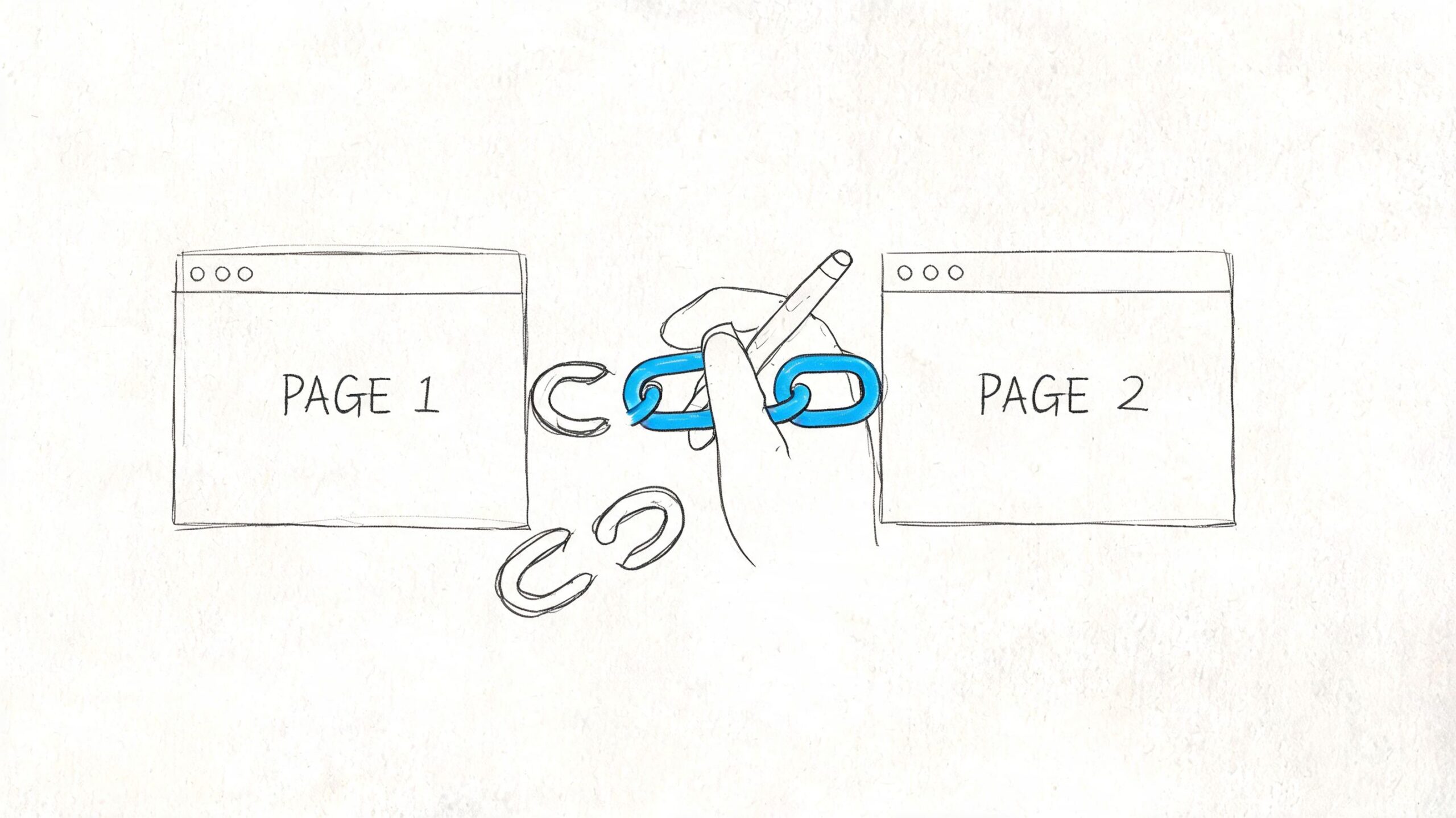
    Want a backlink tactic that still works for business owners without a big brand or a PR team? Start with pages that already have a problem. Broken link building works because you are helping the publisher fix a dead resource while giving them a relevant replacement.

    A strong opportunity usually looks like this. An article in your niche links to a guide, tool, or study that no longer loads. The dead page covered a topic readers still need. You already have, or can publish, a page that solves the same job well enough to deserve the swap.

    A hand connecting two web pages with a blue chain link to represent backlink building.

    The match matters more than volume. A broken link on a relevant page can be worth pursuing. Fifty dead links on weak, off-topic pages usually waste time.

    Here's the filter I use before sending outreach:

    • Topic match: The original dead page covered the same question your replacement answers.
    • Page quality: The linking page is maintained, readable, and sends trust signals.
    • Reader intent: Someone clicking that old link would be satisfied by your page.
    • Editorial fit: Your replacement feels like a resource, not a disguised service page.

    That last point is where many business owners lose the link. If the broken URL used to point to a practical guide and you pitch a product page, the editor has to choose between helping readers and helping you. They will protect the reader.

    Use a crawler, browser extension, or your SEO platform to find dead outbound links on pages that already rank or attract links in your field. Then review the old URL before you pitch. Check what the page used to be about in archive snapshots or by reading the context around the broken link. That small step prevents bad outreach and helps you build a replacement that fits.

    A replacement pitch that gets replies

    Keep the email short and specific. Site owners respond better when the note feels like a quick heads-up, not a campaign sequence.

    Hi [Name], I was reading your page on [topic] and noticed the link in the [section name] goes to a page that no longer loads. The original resource looked like it covered [topic]. We recently published an updated version here: [your page]. If you're revising the page, it could be a useful replacement for readers.

    That format works because it does three things fast. It shows you checked the page. It proves the replacement is relevant. It leaves the decision with the editor.

    If you want to watch the process in action, this walkthrough is a useful starting point.

    One practical trade-off. Broken link building can produce excellent editorial links, but it is slower than directory submissions and less predictable than reclaiming an unlinked mention. The upside is quality. The downside is that you often need to create a better replacement asset before outreach starts.

    Publish first. Pitch second. That order saves time, protects your close rate, and gives you a repeatable process instead of a one-off backlink hunt.

    5. Skyscraper Content and Link Reclamation

    Want backlinks from pages that already prove they link out? Build something better than the asset they reference, or reclaim mentions you already earned.

    Skyscraper content works best when the target topic already has link demand. The job is not to make a page longer. The job is to publish the page editors wish they had cited the first time.

    A practical example: an outdated beginner guide in your niche still picks up links because it ranks, gets shared, and answers a common question. You can compete for those same links with a version that is easier to scan, updated for the current year, and stronger on proof. In my experience, upgrades that win links usually improve the page in three places at once.

    • Usability: Clear section jumps, faster answers, cleaner formatting, and examples a first-time reader can apply.
    • Evidence: Current references, original screenshots, tighter definitions, and fewer vague claims.
    • Utility: Templates, checklists, comparison tables, calculators, or files readers can use right away.

    That is the standard.

    If your page is only “more detailed,” outreach gets ignored because the editor gains nothing by changing the citation. If your page saves their readers time or reduces the chance that the article sends traffic to stale advice, the pitch becomes easier to accept.

    How to find a skyscraper target worth pursuing

    Start with a keyword or topic that matters to your business, then look at the pages already attracting links around that topic. The best targets usually have one of three weaknesses: they are old, they are thin, or they are hard to use. A clunky article with strong backlinks is often a better opportunity than a polished one with the same link count.

    Before creating anything, check the linking pages themselves. Are they industry blogs, software companies, associations, or personal sites no one updates? That tells you how high the bar is. Business owners doing this without an agency should pick targets where a clear upgrade is realistic within a week or two of work, not a three-month research project.

    Link reclamation is the faster play

    Reclaiming unlinked mentions often produces quicker wins because the writer already chose to reference your brand, founder, tool, or research. You are not asking them to change their argument. You are asking them to add the missing path for readers.

    Use a short email:

    Hi [Name], thanks for mentioning [brand/page] in your article on [topic]. I noticed the mention isn't linked. If you want to make it easier for readers to find the resource, the correct page is [URL].

    That message works because it is specific, low-friction, and easy to verify.

    I like to treat reclamation as a weekly maintenance task. Set alerts for your brand name, product names, founder names, and any original studies or frameworks you publish. Then review new mentions in batches. A small list handled consistently beats a giant spreadsheet you never revisit.

    If you need inspiration for the kind of asset that attracts citations, SEOptimer's piece on backlink examples highlights a useful gap. Many pages explain backlink types but do not show them visually. That creates an opening for a screenshot-heavy, annotated resource that editors can cite because it teaches faster than a generic text post.

    One trade-off matters here. Skyscraper outreach can win strong editorial links, but it usually requires more production time than reclamation. Reclamation is faster and simpler to run. Skyscraper campaigns have a higher ceiling when you build an asset that deserves to become the page people cite by default.

    6. Local Citations and NAP Consistency

    For local businesses, some of the most important backlink work looks boring. That doesn't make it optional.

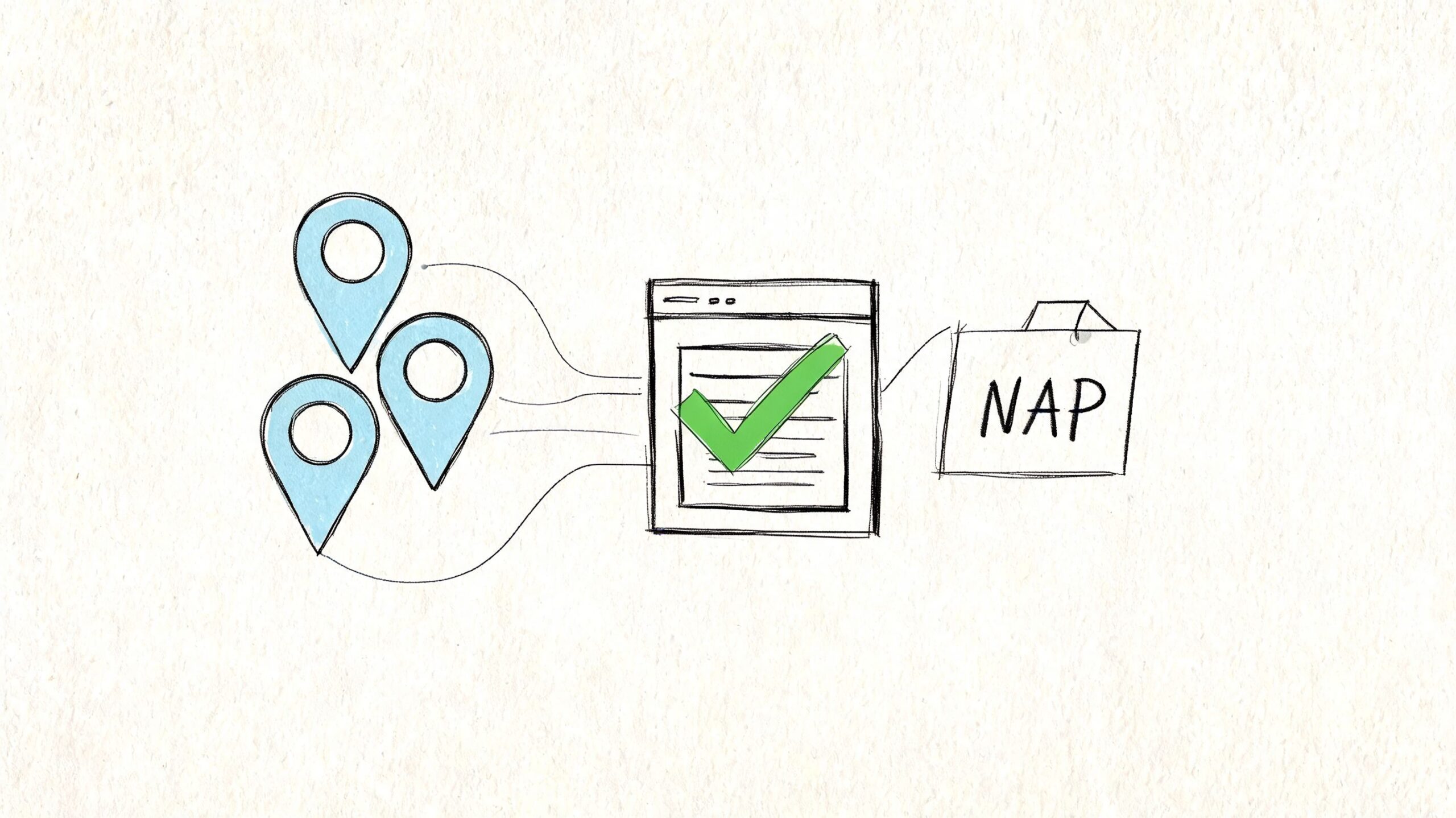
    A local citation is a listing or mention of your business name, address, and phone number across platforms like Google Business Profile, Yelp, Apple Maps, industry directories, and local associations. Some citations include a backlink. Some only include the mention. Both help validate that your business is real and located where you claim.

    What a citation backlink actually does

    If you run a clinic, law office, plumbing company, salon, or restaurant, citations are part of the trust layer beneath your rankings. They support your local presence, reinforce brand consistency, and make it easier for customers to contact you.

    A hand-drawn illustration showing location pins connecting to a webpage with a checkmark and the acronym NAP.

    This category isn't about chasing flashy wins. It's about removing doubt. Search engines and users both notice when your business is called one thing on Yelp, another on Apple Maps, and a third on your own website.

    How local businesses usually mess this up

    The common failures are simple:

    • Inconsistent NAP: Different phone numbers, suite numbers, abbreviations, or business names across listings.
    • Duplicate profiles: Old addresses or old practitioners still attached to legacy pages.
    • Wrong landing page: Every citation points to the homepage even when a location page would fit better.

    Field note: A weak local SEO setup often isn't missing advanced tactics. It's carrying years of messy business data across the web.

    If you're trying to rank in a city or service area, claim the core profiles first, clean up duplicates, and make sure every important listing points to the right page on your site. For a multi-location business, that usually means separate location pages with matching details.

    Citations won't replace editorial links or content assets. They do make every other backlink work harder because they reduce uncertainty around your business identity.

    7. Ego Bait and Influencer Mentions

    Why do some roundup posts attract links while others die after a few social shares? The difference is usually simple. Strong ego bait gives the featured person a real reason to reference the page because the inclusion helps their reputation, supports a claim they already make, or fits a page they already maintain.

    A practical example of backlinks in this category is a tight, niche-focused list such as “Best DTC Packaging Designers” or “Independent CPAs Sharing Tax Advice for Creators.” Broad vanity lists rarely travel. A curated page with clear selection criteria can.

    This works especially well for business owners without an agency because the process is repeatable. Pick a narrow angle, feature people or brands with an obvious audience overlap, add a short reason each one made the list, and publish something polished enough that a team would feel comfortable citing it on a press page, partner page, or founder bio.

    What makes this type of page link-worthy

    The page has to stand on its own. If it reads like a random collection of names, outreach will not save it.

    Quality signals to include:

    • Specific selection logic: Explain why each person or company was chosen.
    • A narrow scope: “Best Shopify email designers for beauty brands” beats “Top marketing experts.”
    • Original commentary: Add your take on what each featured entry does well.
    • Clean presentation: Use headshots, logos, pull quotes, or examples of work where appropriate.
    • Clear fit: Feature people who already have pages where this mention could reasonably appear.

    The trade-off is reach versus credibility. A list of 100 names gives you more people to contact, but weaker editorial standards. A list of 12 to 20 strong picks usually earns fewer replies and more useful mentions.

    Outreach that gets responses

    The first email should not ask for a link. It should make the feature easy to verify and easy to share.

    A simple structure works well:

    • State the inclusion: Tell them they were featured.
    • Show the reason: Mention the specific work, result, or perspective that earned the mention.
    • Give them a use case: Offer a badge, image, or short excerpt for their team.
    • Leave the decision with them: If they want to reference it, the link is there.

    Example:

    Hi [Name], we featured [person/company] in our roundup on [topic] because your work on [specific reason] stood out. We included a short note on [result, project, or differentiator]. If your team wants a square graphic or short excerpt for your press or resources page, I can send one over.

    That last line matters. It gives the recipient a practical next step without turning the message into a request.

    One more field note. This tactic works best when the page is selective enough that inclusion feels earned. If every company in the category makes the list, the mention loses value and the backlink opportunity usually disappears with it.

    8. HARO Help A Reporter Out and Expert Commentary Backlinks

    What if the fastest way to earn a strong backlink is to stop pitching for links and start answering journalists better than everyone else?

    HARO-style opportunities reward usable expertise. A reporter needs a clean quote, a specific example, and a credible source before deadline. Business owners who know their craft can compete here without a big brand, a PR team, or an agency retainer.

    The win is not volume. It is placement quality.

    A published quote on a relevant news site or trade publication often does more for trust and referral visibility than a batch of easy directory links. As noted earlier, strong rankings tend to follow stronger link profiles. Expert commentary will not build that profile on its own, but it can add the kind of editorial mentions that are hard to copy.

    There is also a practical targeting lesson in the DoFollow Nectar case study. They built links to pages worth citing, then passed value to commercial pages through internal linking. Use the same playbook here. If a reporter can cite a useful guide, original data point, checklist, or how-to resource on your site, your odds improve and the link usually carries more value than a homepage mention.

    How to pitch a quote that gets used

    Journalists do not need your brand story. They need clean copy they can drop into an article with minimal editing.

    Use this structure:

    • Credential in one line: State why your experience fits the question.
    • Answer first: Lead with the quote, not the setup.
    • Add one specific detail: Include a result, pattern, or field observation.
    • Finish with attribution: Name, title, company, and website.

    Write the sentence you want to see in print.

    A weak reply says, “I'd love to contribute to this piece. I'm the founder of…” then spends four paragraphs building credibility. A usable reply gets to the point in the first sentence and gives the reporter a clean, quotable angle.

    For example, a local roofer answering a storm-prep query might explain the one inspection mistake that turns minor shingle loss into interior water damage. A fitness founder might describe the habit change clients do maintain after week three. A B2B SaaS operator might point to one implementation bottleneck buyers underestimate and how teams reduce it.

    Quality signals that separate good opportunities from wasted time

    Not every journalist request deserves an answer. Some lead to no attribution, no publication, or topics so broad that your input becomes generic.

    Prioritize requests with these signals:

    • Clear publication or writer identity
    • A topic close to your real operating experience
    • A realistic path to citation, such as your guide, study, process, or firsthand example
    • A publication audience you would want even without the link

    That last point matters. Some commentary links send almost no referral traffic, but they still strengthen credibility. Others drive qualified visitors because the story matches buyer intent. The trade-off is speed versus fit. Broad requests are easier to answer quickly. Narrow requests usually convert better because your expertise stands out.

    A simple outreach template you can reuse

    Subject lines are often fixed inside these platforms, so the body has to do the work. Keep it tight.

    Hi [Name],
    [Name], [Title] at [Company]. We work with [relevant audience/problem].

    Quote: “[2 to 4 sentence answer with one specific insight.]”

    One detail from our work: [brief example, observation, or result without hype].

    Attribution: [Full name, title, company, website]

    A few field notes from campaigns that successfully produce placements. Reply early when you can. Cut adjectives. Give one strong point instead of three average ones. If your answer sounds like website copy, rewrite it until it sounds like a person who has solved the problem before.

    Expect misses. Plenty of good responses never get picked. That is normal. The businesses that get results from expert commentary treat it like a repeatable pipeline: monitor requests, answer the tight-fit ones, send publication-ready quotes, and build a small library of cite-worthy assets on the site.

    8 Backlink Strategies Compared

    Strategy Implementation Complexity 🔄 Resource Requirements ⚡ Expected Outcomes ⭐📊 Ideal Use Cases 💡 Key Advantages ⭐
    Editorial Backlinks from Industry Publications 🔄 Very high, editorial vetting, long lead times ⚡ Moderate–high, PR/outreach, top-tier content & relationships ⭐📊 Very high SEO authority and qualified referral traffic 💡 Brand credibility, product launches, expert commentary for small businesses ⭐ Highest ranking impact; durable, highly trusted links
    Guest Posting and Contributor Articles 🔄 Medium–high, pitching, editorial review, revisions ⚡ High, long-form writing, outreach volume, possible outsourcing ⭐📊 High when on quality hosts; drives referral traffic and topical authority 💡 Thought leadership, audience growth, niche authority building ⭐ Contextual backlinks + direct audience exposure; scalable with process
    Resource Page and Directory Backlinks 🔄 Low, listing submissions and approvals ⚡ Low, simple submissions; can be automated at scale ⭐📊 Medium SEO value per link; cumulative referral/local impact 💡 Local businesses, SaaS on review platforms, broad directory coverage ⭐ Easy wins; scalable; improves local discovery and citations
    Broken Link Building 🔄 Medium, research + outreach workflow ⚡ Moderate, tools for discovery + targeted outreach/content ⭐📊 Very high, contextual links from established domains with good conversion 💡 Sites with many resource pages or outdated roundups; competitive niches ⭐ High success rate when targeted; mutually helpful for webmasters
    Skyscraper Content & Link Reclamation 🔄 High, large content projects + targeted outreach ⚡ High, significant content creation and SEO tooling ⭐📊 Very high, combines organic rankings with quality backlinks 💡 Competitive keywords, data-heavy topics, brands replacing inferior resources ⭐ Builds topical authority; sustainable and compounding results
    Local Citations & NAP Consistency 🔄 Low, claim and standardize listings ⚡ Low–moderate, time to create/verify many listings (tools available) ⭐📊 Very high for local search; medium for broader SEO 💡 Local service businesses (plumbers, clinics, restaurants) ⭐ Essential for local rankings and map visibility; high ROI for local SMBs
    Ego Bait & Influencer Mentions 🔄 Medium, content creation + influencer outreach ⚡ Moderate, creative assets, research, personalized outreach ⭐📊 High but variable, potential viral reach and high-authority mentions 💡 Niches with active influencers (marketing, tech, lifestyle) ⭐ Fast amplification and relationship-building; strong referral spikes
    HARO & Expert Commentary Backlinks 🔄 Low–medium, quick, time-sensitive responses ⚡ Low, time to craft concise, quotable replies; repetitive participation ⭐📊 Very high, premium publication links and brand mentions 💡 Experts, founders, PR-focused owners seeking earned media ⭐ Free access to high-authority backlinks and media validation

    Your Backlink Blueprint From Example to Execution

    What should you do first if you want backlinks that improve rankings instead of wasting a month of effort?

    Start by matching the tactic to the business. That decision matters more than the outreach template. A local service company usually gets faster returns from citation cleanup, local press, and unlinked mention reclamation. A founder with real expertise can often get better links from journalist requests and expert commentary than from cold guest post pitches. A site with useful content already published should usually strengthen what it has before creating more.

    The pattern is simple. Relevant links on pages people read keep paying off. Placements bought for the sake of having "more backlinks" tend to fade in value, send weak referral traffic, or create cleanup work later.

    I'd keep the first 30 days tight.

    • Fix the pages and profiles you already control: clean up citations, standardize business details, and reclaim mentions that should already link to you.
    • Choose one page worth promoting: a guide, original resource, tool, calculator, checklist, or data page.
    • Run one outreach motion at a time: broken links, journalist responses, contributor pitches, or resource page outreach.
    • Route authority with internal links: send link equity from informational pages to the service, product, and category pages that need to rank.

    This is the part business owners often skip. They collect examples, then chase all of them at once. The better approach is narrower and less exciting. Pick one lane, set a weekly quota, and review results after a month. Ten well-researched pitches to relevant sites will usually teach more than a hundred generic emails sent from a template you barely customized.

    Quality still decides the outcome. As noted earlier, the web already contains an overwhelming number of backlinks. You do not need scale for its own sake. You need a small set of links that fit the page, fit the topic, and come from sites your customers or peers would recognize as credible. In practice, a few strong placements can do more for a money page than dozens of low-trust directory listings or recycled guest posts.

    Use this checklist before you spend time on any prospect:

    • Is the linking site topically related to your business?
    • Does the page get updated and appear maintained?
    • Would a human reader click the link and find it useful?
    • Is the page already stuffed with outbound links?
    • Can you point the link to a page that deserves to rank, not just your homepage?
    • Will this placement still look natural six months from now?

    If two or three answers are weak, skip it.

    Backlink building works best as a system, not a scavenger hunt. Build one asset. Promote it through one channel. Track replies, placements, and assisted ranking gains. Then keep the winners and cut the busywork. That is how small teams get results without handing the whole process to an agency.

    Agency Secrets helps business owners turn SEO theory into a working system. If you want a practical way to research keywords, publish authoritative content, and earn relevant backlinks without hiring an agency, Agency Secrets is worth a look. It lays out the playbook clearly, and its recommended platform, OutRank, is built to automate the heavy lifting so small teams can compete consistently.